Monster’s Secret Weapon: Coke’s Bottling Army
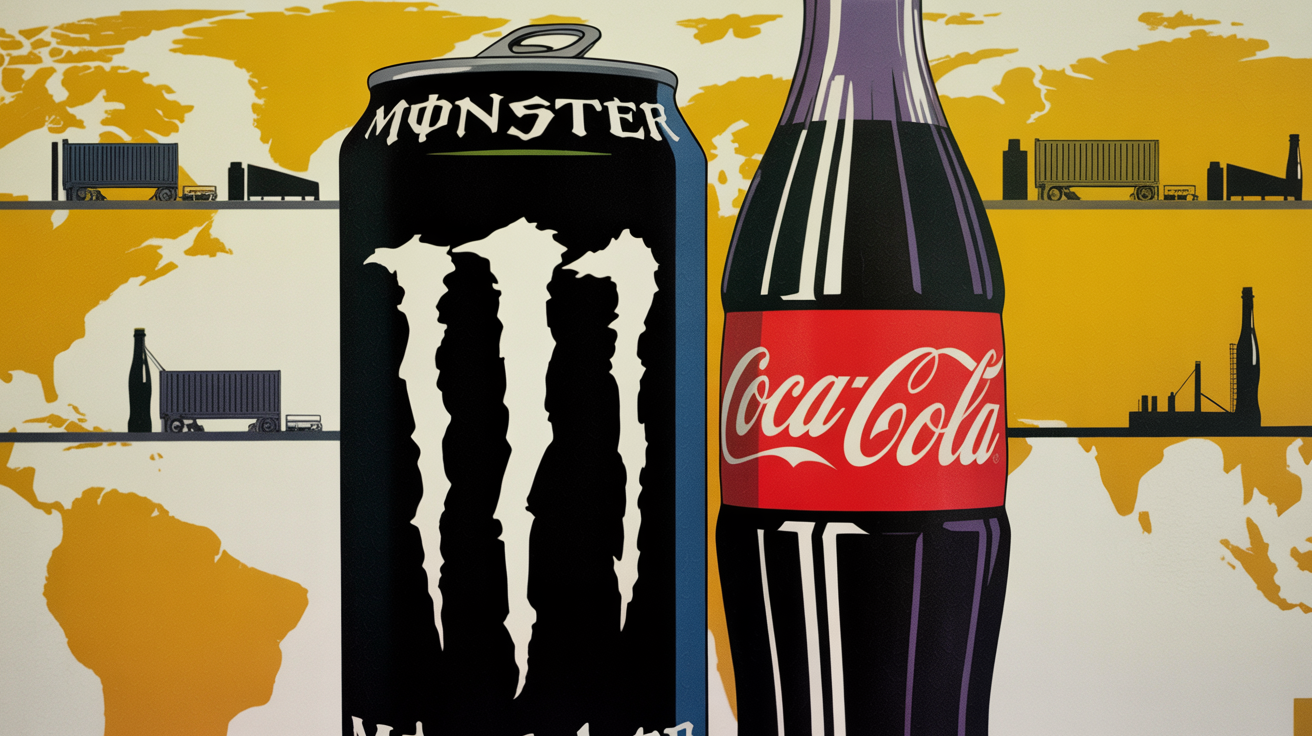
Monster Energy global expansion is accelerating fast, using Coca-Cola's bottling infrastructure to push into Southeast Asia, India, China, and EMEA.

International markets now account for nearly half of Monster Beverage’s total business. That number is climbing, and the engine behind it is Coca-Cola’s global bottling network. For energy drink suppliers and retail operators watching category growth, this distribution play is worth studying closely.
TLDR
- International sales are approaching 50% of Monster’s total revenue.
- Coca-Cola’s bottler network is the primary expansion vehicle.
- Southeast Asia, India, China, and EMEA are the priority growth markets.
- Distribution infrastructure, not product, is the key competitive lever here.
- Energy drink category growth is increasingly a global, not domestic, story.
Monster Beverage is leaning hard into Coca-Cola’s bottling infrastructure to drive Monster Energy global expansion across four high-priority regions: Southeast Asia, China, India, and EMEA. According to FoodNavigator-USA, international revenues are now approaching half of Monster’s total business, a threshold that would have seemed ambitious just a few years ago.
Significant.
Monster Energy Global Expansion: The Distribution Advantage
The Coca-Cola bottler relationship gives Monster something most energy drink challengers cannot replicate: cold-chain reach into markets where retail infrastructure is still maturing. Specifically, that means access to millions of outlets across South and Southeast Asia that independent distributors struggle to serve consistently.
In China and EMEA, the calculus is slightly different. Both markets carry established energy drink competitors. However, Monster’s Coke-backed logistics give it a cost and speed-to-shelf edge that brand marketing alone cannot deliver.
What This Means for Operators and Suppliers
For retail buyers and foodservice operators, Monster’s international push signals sustained category investment, not a short-term volume grab. Energy drink shelf sets in emerging markets will grow more competitive, and suppliers in adjacent functional beverage categories should expect Monster to absorb more premium positioning as its global footprint widens.
Additionally, ingredient and packaging suppliers tied to Monster’s contract manufacturers should anticipate volume growth signals from these four regions specifically. Watch India and Southeast Asia first: both combine rising disposable income with underpenetrated energy drink consumption per capita.
The broader takeaway for the industry is straightforward. Distribution scale, not formulation novelty, is now the primary growth lever in the global energy drink race. Monster is not winning on clean-label credentials or functional innovation. It is winning on logistics. That gap remains an opening for brands that can compete on both dimensions simultaneously. The Future of Food has tracked the functional beverage category’s clean-label pivot closely, and Monster’s conventional formula has yet to follow that curve.
Source: FoodNavigator-USA. https://www.foodnavigator-usa.com/Article/2026/06/08/monster-uses-coca-cola-network-to-expand-energy-drinks-globally/