
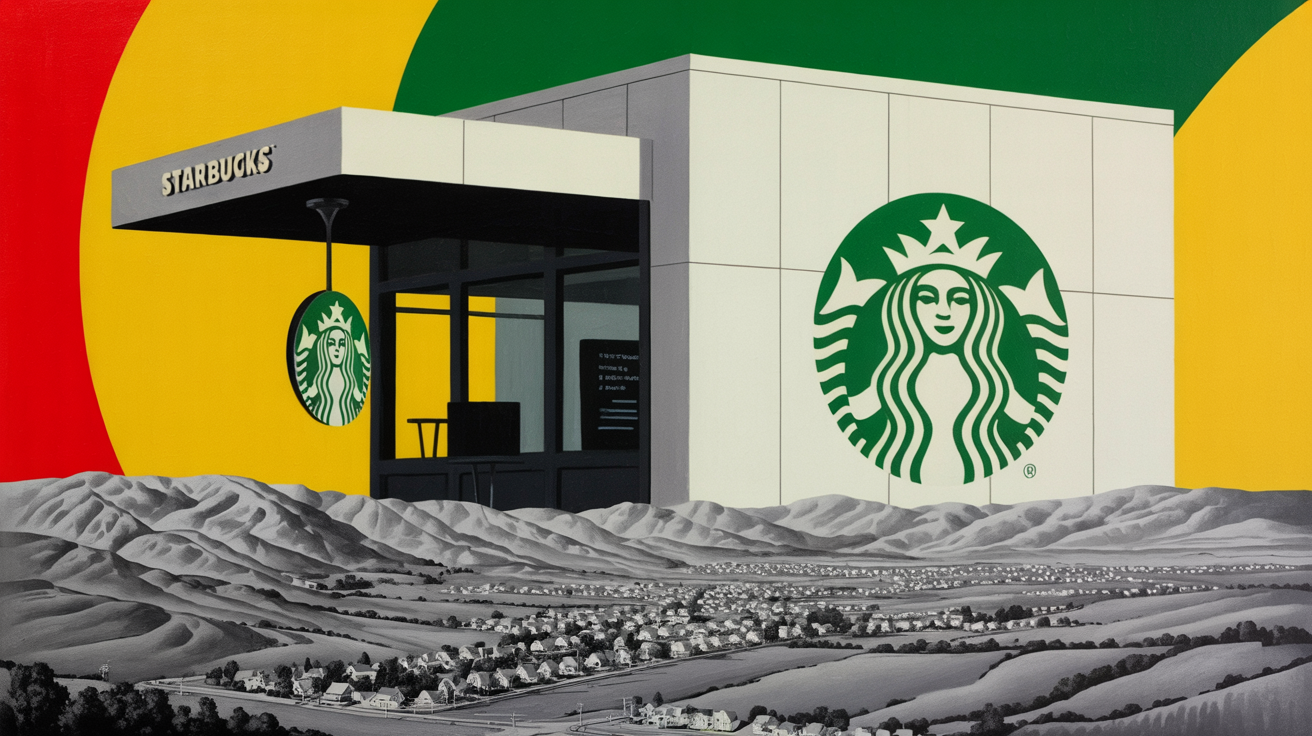
Starbucks Bets Smaller Stores Unlock 10,000 New U.S. Locations
Starbucks smaller store growth strategy targets up to 10,000 new U.S. units, using compact footprints and drive-thrus to reach untapped markets.

Starbucks is rethinking what a coffee shop needs to be. The chain believes its Starbucks smaller store growth strategy, built on reduced footprints and drive-thru formats, could unlock between 5,000 and 10,000 additional U.S. locations. That is a significant expansion bet from a brand already on nearly every corner.
TLDR
- Starbucks sees 5,000 to 10,000 new U.S. units as achievable via smaller formats.
- Drive-thru capability is central to the compact-store expansion plan.
- Smaller footprints lower build costs, potentially accelerating franchisee and operator interest.
- The strategy targets markets previously considered too small or expensive to enter.
- Format flexibility signals a broader industry pivot away from large flagship stores.
Starbucks Smaller Store Growth: The Core Thesis
Starbucks has long anchored its brand in large, community-style café spaces. That model is expensive to build and limits where the chain can realistically operate. Smaller footprints change that calculus entirely.
The company believes compact locations, including drive-thru-only formats, can penetrate suburban and rural markets previously off the table. Reaching 10,000 new U.S. units would nearly double its current domestic presence. Significant.
Drive-thru lanes are not an afterthought here. They are load-bearing infrastructure in this growth model. Off-premises volume has reshaped how chains measure unit economics, and Starbucks is leaning into that shift directly.
What This Means for Operators and Suppliers
Smaller stores mean lower construction costs and faster build timelines. For real estate teams and equipment suppliers, that signals a shift in spec requirements across the board.
Ingredient and packaging suppliers should note the operational implications too. Streamlined menus often accompany smaller formats, which can tighten SKU counts and concentrate volume on core items. Additionally, labor models in compact units tend to differ sharply from full-café staffing structures.
The broader quick-service sector has already moved in this direction. Chains prioritizing off-premises and format flexibility have consistently outperformed those anchored to a single store type. Starbucks arriving here is less a surprise than a confirmation of where the industry is heading.
For operators watching unit economics closely, the Starbucks smaller store growth pivot is a data point worth tracking. The chain’s scale means its format experiments carry outsized market signal. Nation’s Restaurant News has the full breakdown of the strategy.
Source: Nation’s Restaurant News. https://www.nrn.com/quick-service/why-starbucks-thinks-smaller-stores-will-translate-into-more-growth