
Oatly Backs Urine Fertilizer Pilot, Putting Pee at the Center of the Oat Supply Chain

Oatly has signed on to a urine-to-fertilizer project, and the move is more interesting than the punchline suggests. The Swedish oat milk maker is lending its brand and supply chain heft to an initiative that converts human urine into agricultural fertilizer, recovering the phosphorus and nitrogen that crops need most.
That detail matters. Phosphorus and nitrogen are not abstract sustainability talking points. They are the two macronutrients that determine whether a field of oats yields a crop or a disappointment. Phosphorus in particular is a finite, mined resource, concentrated in a handful of countries, and subject to the same geopolitical and supply chain shocks that have rattled food producers for the last several years. Synthetic nitrogen, meanwhile, is energy-intensive to produce and carries a significant carbon footprint through the Haber-Bosch process.
Human urine, it turns out, is rich in both. A single adult produces enough nutrients in a year to fertilize a meaningful patch of farmland. The technology to safely sanitize, concentrate, and apply urine as fertilizer has been quietly maturing for years in Scandinavia, Switzerland, and a handful of pilot programs in the United States and South Africa. What has been missing is a consumer brand willing to attach its name to the concept and bring it out of the wastewater research circuit.
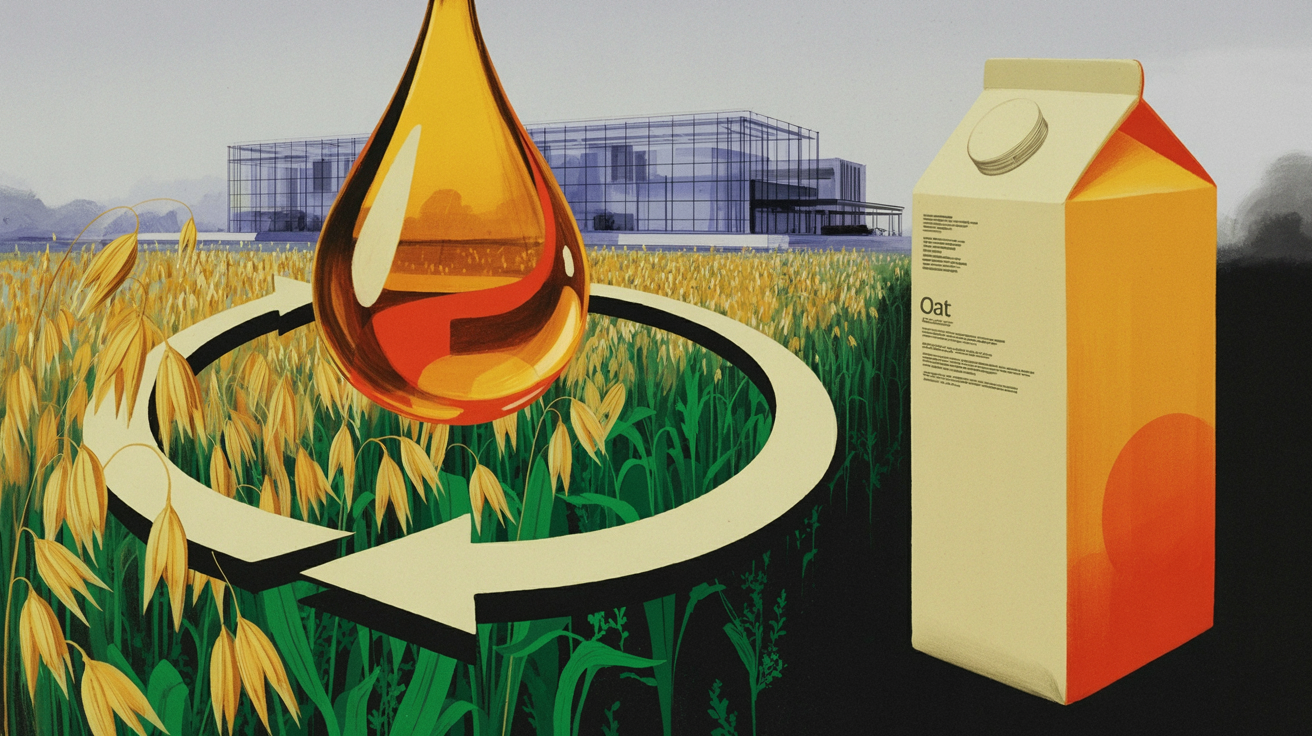
Enter Oatly. The company’s involvement does two things at once. It gives the pilot mainstream visibility, and it ties oat cultivation directly to a closed nutrient loop. Oats grown with recovered urine fertilizer, processed into oat milk, consumed by humans, whose nutrients then return to the soil to grow more oats. That is the kind of circular story that ESG officers and retail buyers have been demanding from suppliers, and it is far more defensible than vague carbon-offset claims.
There are real questions worth watching. How will the urine be collected at scale, given that most building plumbing mixes it immediately with everything else going down the drain? How will regulators in different markets handle food crops grown with human-derived inputs, especially given consumer squeamishness? And how much of the fertilizer used in Oatly’s actual oat supply will come from this pilot versus remain a marketing demonstration?
Still, the strategic logic is clean. Oatly has spent the last few years trying to differentiate beyond taste and price in a category where private label and legacy dairy are squeezing margins. Sustainability credentials have become table stakes rather than differentiators, which means the brands that move first on credible, documented, closed-loop claims will be the ones still standing when retailers tighten their sourcing requirements.
A urine fertilizer pilot is not the kind of headline most CPG brands chase. That is precisely why it is worth paying attention to. The next time someone asks where the future of plant-based agriculture is headed, the honest answer might be: back to the bathroom.