
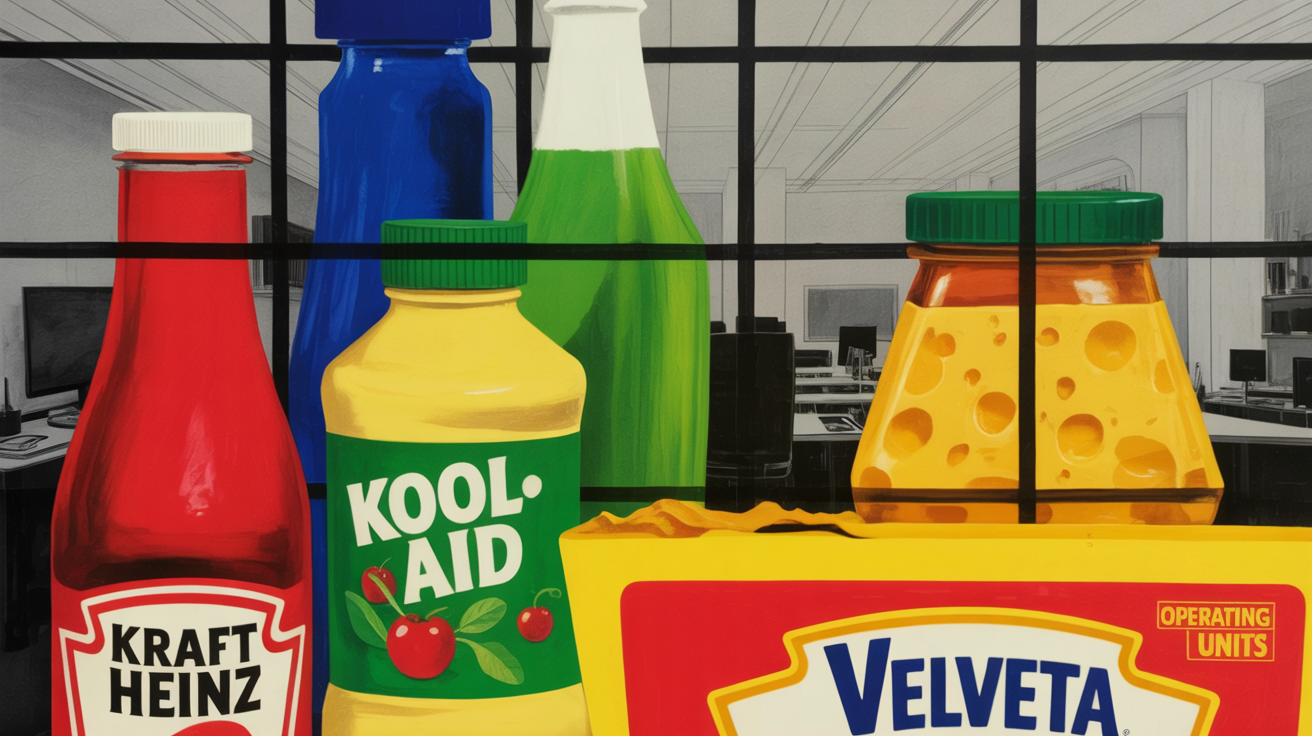
Kraft Heinz Bets a Restructure Will Fix What Reformulation Couldn’t
The Kraft Heinz restructuring splits the company into three operating units and cuts senior leadership as declining sales demand more than a rebrand.

Kraft Heinz is reorganizing its entire operating structure, a move that signals the company’s existing setup has failed to stop a prolonged sales slide. The Kool-Aid and Velveeta maker will consolidate into three business units and eliminate senior leadership roles. Structural fixes, however, rarely solve product-level problems on their own.
TLDR
- Kraft Heinz splits into three new operating units to streamline decisions.
- Senior leadership cuts aim to reduce bureaucracy slowing growth response.
- Declining sales triggered the overhaul, not a proactive growth strategy.
- Reorganization alone cannot substitute for product and ingredient modernization.
- Suppliers and retail partners should expect procurement and contact changes.
Kraft Heinz announced a sweeping reorganization, restructuring into three distinct operating units as part of a turnaround effort reported by Food Dive. The company is simultaneously cutting senior leadership positions, signaling urgency around a sales trajectory that has resisted prior fixes.
The move follows years of underperformance tied, in part, to a portfolio heavy with legacy center-store brands. Consumers have steadily shifted toward cleaner labels, shorter ingredient lists, and fresher formats. Kraft Heinz has been slow to match that pace.
Kraft Heinz Restructuring: What Changes for Operators
For food-industry suppliers and retail partners, the three-unit structure likely means new procurement contacts, revised category leadership, and potential shifts in promotional priorities. Specifically, consolidating decision-making layers could accelerate (or complicate) vendor negotiations in the near term.
The leadership cuts add another variable. Institutional knowledge walks out with departing executives. Transition periods create gaps that ripple into supply chain coordination and retailer planning cycles.
Additionally, restructuring announcements often precede brand divestitures. Kraft Heinz has sold assets before; operators should monitor which brands land in which unit and whether any are quietly deprioritized.
Structure Is Not Strategy
Leaner org charts help. They rarely reverse consumer-driven volume losses on their own. Brands like Kool-Aid and Velveeta carry significant reformulation debt in a market where clean-label momentum keeps compounding.
Companies that paired structural change with genuine ingredient and transparency upgrades, such as those investing in real-food reformulation, have outperformed peers who reorganized without touching the product. That comparison is now Kraft Heinz’s most relevant benchmark.
The Food Dive report notes the reorganization is framed as accelerating growth. Whether the three new units come with product mandates, not just reporting lines, will determine if this overhaul is substantive or cosmetic.
Source: Food Dive. https://www.fooddive.com/news/turnaround-kraft-heinz-overhauls-operating-structure-to-accelerate-growth/823247/