Inside This Week At Nestlé: Everything, Everywhere, Going Wrong All at Once

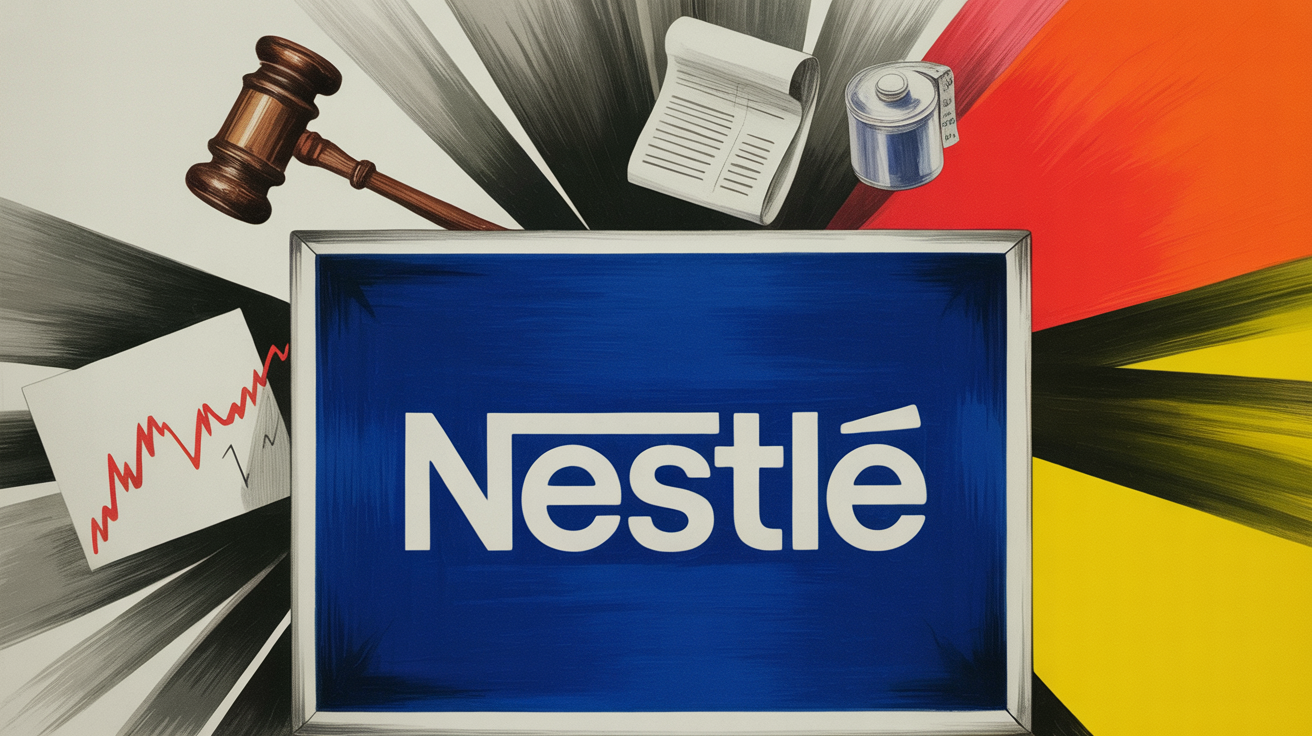
It has been a chaotic week for Nestle. The world’s largest food company released its Q1 2026 earnings, announced a major acquisition, published a sustainability report, and simultaneously found itself on the wrong end of a French court, a Greek consumer protection fine, an investor divestiture, and ongoing environmental scrutiny. The feel-good stories are real. So is the bad press. Here is a breakdown of everything happening at once.
Q1 2026 Earnings: Growth With an Asterisk
Nestle posted 3.5% organic growth in Q1 2026, with real internal growth of 1.2% and pricing of 2.3%. CEO Philipp Navratil called it evidence that a RIG-led growth strategy is working. Coffee led the charge with 9.3% organic growth. Petcare and Food and Snacks also contributed positively. The headline sounds clean. It is not entirely.
The infant formula recall launched in January 2026, after contamination from a globally sourced ingredient, dragged organic growth down by roughly 90 basis points. Nutrition overall declined 3.9%. Greater China fell 10.6% on RIG, a combination of the recall fallout and ongoing trade inventory corrections. The company says availability is back to normal and expects full recovery by year end. Reported sales were CHF 21.3 billion, a 5.7% decline year on year, hit hard by a 9.3% foreign exchange headwind. The CEO remained publicly upbeat on margins, citing retreating coffee and cocoa input costs as a tailwind for the second half of the year.
Nestle Goes All-In on yfood’s Liquid Meals
Nestle just closed the loop on a bet it made three years ago. The company has acquired the remaining 51% of yfood Labs, the German complete nutrition ready-to-drink brand it first backed in 2022. The deal values yfood at around $523 million. The move signals where the food giant sees durable growth: portable, health-forward formats that consumers actually trust.
yfood positions itself around nutritionally complete, convenient liquid meals. Its core audience is time-pressed consumers who want real nutritional value without processed junk. That profile aligns tightly with the clean-label momentum thefutureoffood.org has tracked across every major retail channel. The brand competes with Huel, Soylent, and a growing field of European challengers. The category is no longer niche. Buying out the founders and remaining stakeholders gives Nestle full control over formulation, distribution, and brand positioning. Consumer demand for portable, transparent nutrition has accelerated post-pandemic, and Nestle is paying full price to own that trend outright.
Which Nestle Brands Are Living on Borrowed Time?
Nestle is not trimming around the edges anymore. The world’s largest food company is conducting a systematic review of its brand roster, and suppliers, retailers, and co-manufacturers should be watching closely. According to DairyReporter, the company’s push for growth and efficiency is actively raising questions about which brands survive the next round of cuts. Dairy and powdered beverages are explicitly in the frame.
Nestle has already demonstrated willingness to exit legacy categories. The divestiture of its North American water brands and the sale of Blue Bottle Coffee set clear precedent. The current review follows the same logic: underperforming or strategically misaligned brands become liabilities, fast. New leadership has been explicit about prioritizing fewer, stronger brands. That framing leaves little room for mid-tier performers with thin margins or low growth trajectories.
For food-industry operators, the stakes are practical. Co-manufacturers, ingredient suppliers, and retail buyers with deep exposure to Nestle’s secondary brands should model downside scenarios now. A brand exit can mean lost volume, reformulation costs, or abrupt SKU discontinuations. However, Nestle’s cuts also create openings. Emerging brands with clean-label credentials and category momentum are well-positioned to fill shelf space that legacy brands vacate.
The Dairy Plan Report: Good News With Baggage
Also this week, Nestle published its inaugural Dairy Plan report, claiming a 26% reduction in greenhouse gas emissions across its dairy value chain in 2025, measured against a 2018 baseline. The company says it is working with 130,000 dairy farmers across more than 40 countries, deploying regenerative agriculture practices, improving animal welfare, and reducing methane through better feed and manure management. Over 34% of Nestle’s dairy is now sourced from farmers implementing regenerative agriculture practices, per the report.
The timing of the report is notable. Nestle quietly exited the Dairy Methane Action Alliance in October 2025, drawing immediate criticism from investors and environmental groups. That departure proved to be a breaking point for Railpen, one of the UK’s largest pension funds, which manages around 34 billion pounds on behalf of the Railways Pension Scheme. Railpen confirmed this week, in its latest Stewardship Report, that it divested its entire Nestle holding as of late 2025. The fund cited limited responsiveness to investor feedback, governance concerns, a 30% share price decline over five years, and the methane alliance exit as the drivers of its decision. Publishing a comprehensive Dairy Plan in the same week that Railpen’s divestiture became public does not look accidental. Whether the report’s numbers hold up to independent scrutiny remains an open question, particularly given broader industry criticism that major food companies are overstating climate progress.
Perrier and the French Fraud Investigation That Will Not Go Away
French authorities raided Nestle’s Perrier bottling facilities in Vergeze and a Vosges laboratory on May 19, 2026, as part of an ongoing fraud investigation into alleged deception over water sourcing and treatment practices. The Perrier controversy dates back to revelations in French media about illicit filtration systems used on water marketed as natural mineral water. A French Senate committee reported in May 2025 that Nestle and French officials had concealed the company’s filtering practices. A French court rejected an immediate ban brought by a consumer group in November 2025, and the government gave Nestle a green light to continue Perrier operations in December 2025. But the raids last month indicate the criminal investigation is still very much active.
Compounding the pressure, Nestle Waters is simultaneously facing a separate trial in France over allegations of large-scale illegal plastic dumping. The company’s subsidiary Nestle Waters Supply Est is accused of having illegally dumped hundreds of thousands of cubic meters of plastic, glass, and demolition waste near its bottled water facilities over a period of at least ten years, contaminating groundwater and surrounding soil. New footage published in the past week has intensified scrutiny. Nestle agreed to pay a 2 million euro fine as part of a settlement in September 2024, but the criminal case has continued. The company is also in the middle of a sale process for its Waters division, and this ongoing legal exposure is now a material factor for any potential buyer.
Greece Fines Nestle Hellas for Price Gouging
Greek consumer protection authorities fined Nestle Hellas nearly 3 million euros this week for price gouging. The fine came from the country’s Independent Authority for Market Control and Consumer Protection. It adds to a smaller penalty of 144,700 euros Nestle Hellas had already received in February 2026 for exceeding gross profit margin limits across four product codes. Greece has maintained active anti-profiteering legislation since the inflationary period and has been issuing fines across the retail and food sector. Nestle is among the largest companies to face a significant penalty under the framework.
The Pattern Is Clear
Nestle is navigating a legitimately difficult moment. The operational fundamentals are improving: organic growth is back above 3%, Coffee is surging, Petcare is solid, and the company is making deliberate portfolio moves toward high-growth formats. The yfood deal is a smart bet. The Dairy Plan numbers, if accurate, represent meaningful progress.
But the simultaneous accumulation of legal, regulatory, and ESG pressures is not a coincidence. It reflects years of decisions: exiting climate coalitions, managing water sourcing controversies with opacity, pricing aggressively in markets with anti-gouging rules, and allowing environmental compliance to drift at the Waters subsidiary. Publishing feel-good reports alongside Q1 results in the same week as a French raid, a Greek fine, and a high-profile investor divestiture is a communications strategy, not a resolution. The underlying issues are real, and they are not going away quickly.
Source: Nestle Q1 2026 Press Release. https://www.nestle.com/media/pressreleases/allpressreleases/three-month-sales-2026
Source: Net Zero Investor. https://www.netzeroinvestor.net/news-and-views/briefs/railpen-divests-from-nestle-over-methane-alliance-exit-and-climate-concerns
Source: Nestle Dairy Plan Report. https://www.nestle.com/media/news/first-dairy-plan-report
Source: Food Dive. https://www.fooddive.com/news/neste-buys-rest-of-ready-to-drink-meals-brand/821884/
Source: DairyReporter. https://www.dairyreporter.com/Article/2026/05/30/nestles-portfolio-shakeup-the-brands-under-pressure/
Source: FoodNavigator. https://www.foodnavigator.com/Article/2026/06/01/nestle-waters-alleged-plastic-dumping-threatens-unit-sale-and-future-strategy/