
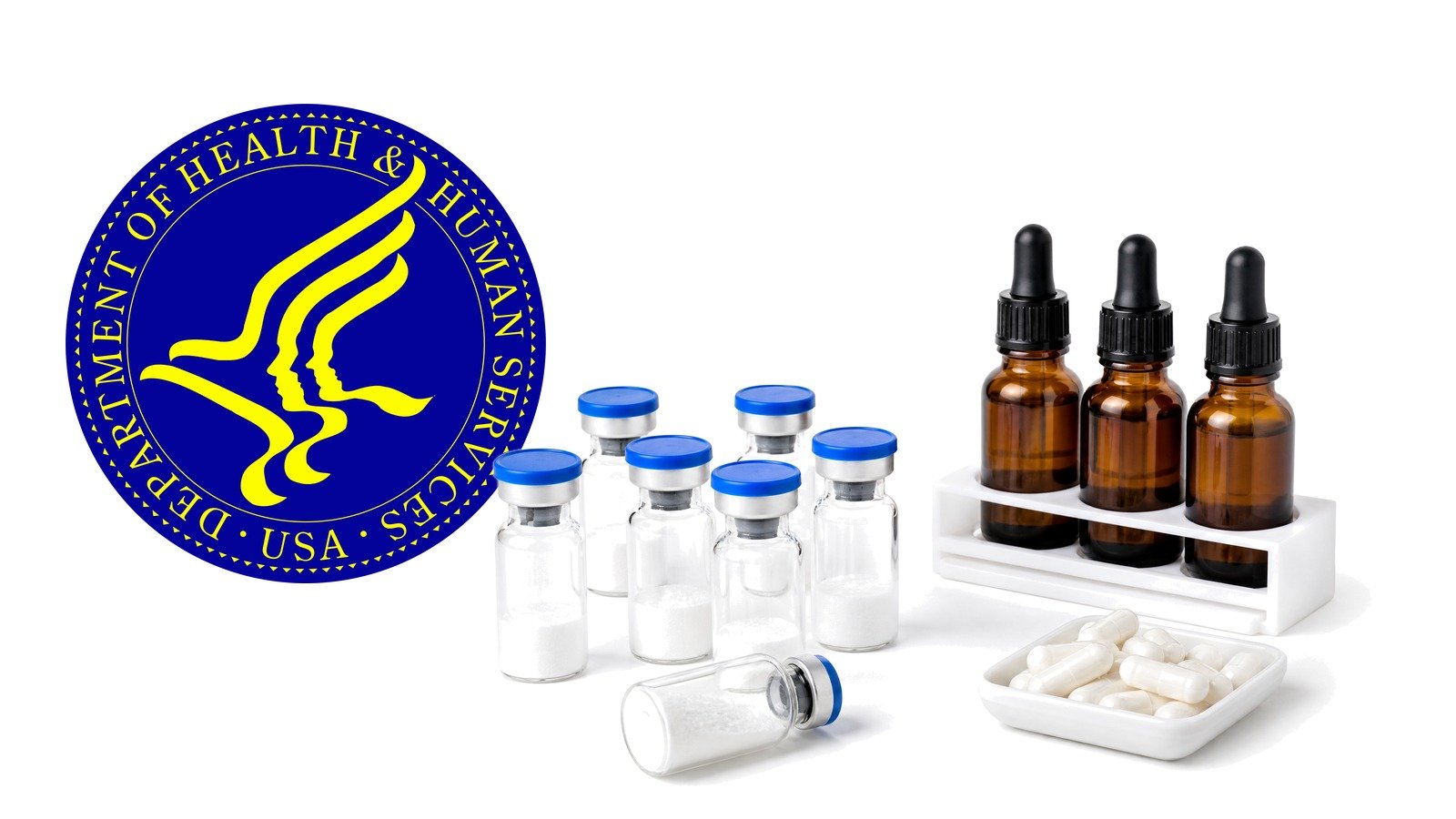
HHS Says It Won’t Act Against Pharmacies Compounding Six Unapproved Peptides, Against the Advice of FDA Scientists
An interim policy signed by Health Secretary Robert F. Kennedy Jr. says HHS will not act against compounders of BPC-157 and five other peptides. It does not make them FDA approved.

Peptides such as BPC-157 and TB-500 are promoted online for muscle building and soft tissue repair, BioSpace reported. Now the Department of Health and Human Services (HHS) says it will not stop pharmacies from compounding six of them, even though FDA’s career scientists recommended against it.
TLDR
- HHS published an interim enforcement discretion policy covering BPC-157, epitalon, KPV, MOTS-c, Semax and TB-500.
- The policy was signed by Secretary Robert F. Kennedy Jr. and came from the Office of the Secretary, not FDA, AJMC reported.
- HHS says it does not grant FDA approval or establish that the peptides are safe or effective.
- HHS filed the policy Oct. 28 for Federal Register publication Oct. 30, and written comments are due two weeks after publication.
What the Policy Does
HHS says it does not intend to take enforcement action against state-licensed pharmacies, federal facilities or licensed physicians that compound the six peptides while FDA works through rulemaking on its list of bulk substances for compounding. HHS says the policy requires patient-specific prescriptions, traceable ingredients, quality testing and safety reporting, and that it can be revisited if “a safety signal or product quality issue arises.” The notice says the policy “does not establish any rights for any person and is not binding on HHS or the public.”
HHS says the aim is to steer people away from research-use-only peptides from foreign manufacturers and to offer a “more controlled alternative,” BioSpace reported.
The Scientific Dispute
In July, FDA’s Pharmacy Compounding Advisory Committee voted to recommend the six peptides and rejected a seventh, emideltide. Several votes were close: BPC-157, KPV and TB-500 each passed 8-6 with one abstention, according to Holland & Knight. FDA’s career scientists had recommended against all seven, AJMC reported.
The Reaction
The Alliance for Pharmacy Compounding called the action “an important step for patients,” and the American Academy of Peptide Medicine called it “a vital step toward eliminating the unsafe gray and black markets.”
Critics disagreed. The policy “leaves Americans in a gray area as to whether peptides are safe or not,” said Shabbir Imber Safdar, executive director of the Partnership for Safe Medicines. Jim Stansel, general counsel of PhRMA, the drugmakers’ trade group, called it “deeply concerning” and said access to peptides not shown to be safe or effective in clinical trials “jeopardizes patient safety.”
What It Doesn’t Cover
Before the policy was issued, attorneys at Holland & Knight wrote that an interim policy would not likely cover products sold as research chemicals or dietary supplements, and that the peptides under review remain unapproved drugs. FDA issued five warning letters to online peptide vendors in August, finding that “research use only” labels did not outweigh evidence of human use. Five more peptides are expected to go before the advisory committee by February.
Why It Matters
HHS says the policy does not establish that these peptides are safe or effective, and the notice says it is not binding on HHS. Holland & Knight attorneys wrote that enforcement discretion “would not change the underlying law.”
Sources: AJMC; BioSpace; Holland & Knight.