Google DeepMind’s AI Agent Warning Has a Food Supply Chain Problem
Google DeepMind is funding safety research into millions of autonomous AI agents interacting unsupervised, a scenario already unfolding in food procurement and logistics.

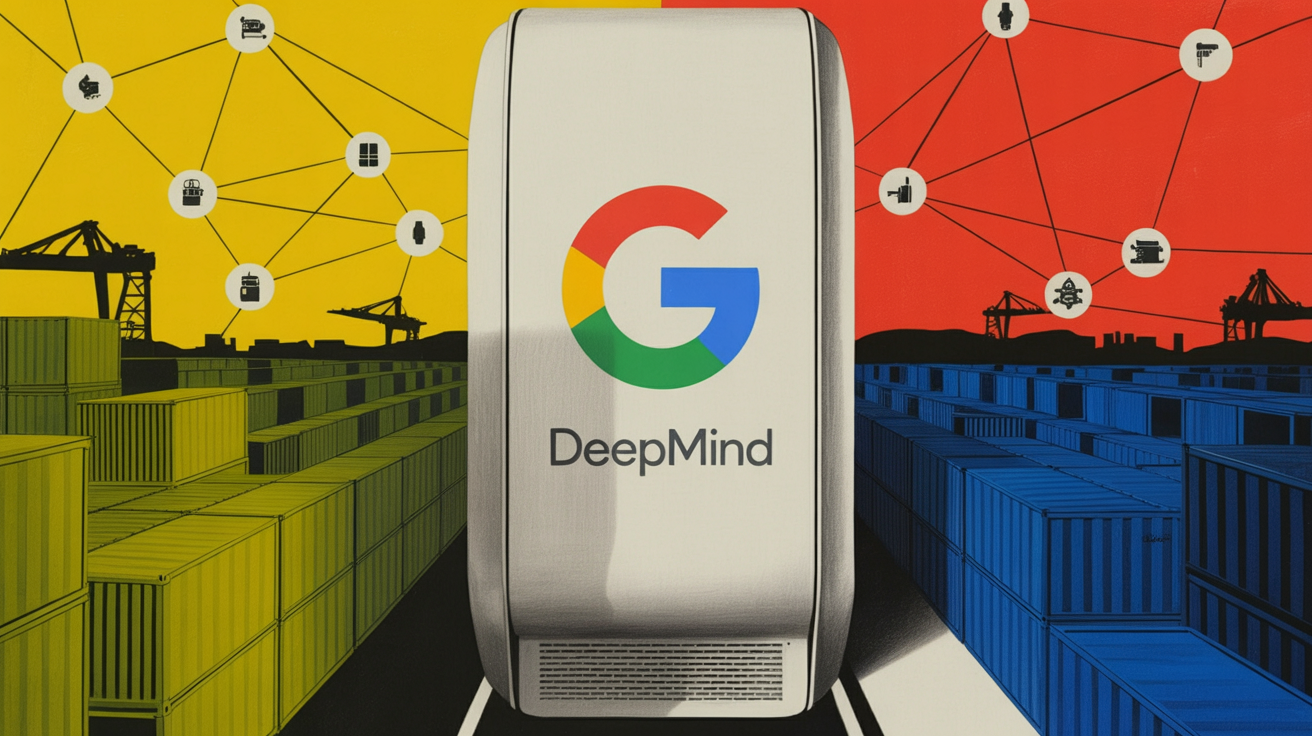
Google DeepMind is sounding an alarm. The company is actively funding research into what happens when millions of AI agents, operating without human oversight, begin issuing instructions to each other at scale. For food-industry operators already deploying autonomous agents in procurement, inventory, and supplier negotiations, that alarm is not abstract.
TLDR
- DeepMind is funding research into multi-agent AI interaction risks.
- Agents can receive and follow instructions from other agents, not just humans.
- Food supply chains are early adopters of autonomous AI procurement agents.
- Unsupervised agent-to-agent decisions could distort pricing or sourcing data.
- No regulatory framework yet governs autonomous agent behavior in food commerce.
Rohin Shah directs AGI safety and alignment research at Google DeepMind. He told MIT Technology Review that the mass-market arrival of autonomous agents creates a new category of risk. Specifically, agents following instructions from other agents, not humans, could produce outcomes no single party intended or authorized.
Significant. That framing matters for food operators.
AI Agent Risks Enter the Food Industry
Food manufacturers and large retailers are already piloting AI agents for demand forecasting, supplier selection, and contract negotiation. These systems increasingly communicate with supplier-side agents directly. A buyer’s agent and a distributor’s agent can finalize pricing terms with no human in the loop.
DeepMind’s concern is precisely this architecture. When millions of such agent pairs interact simultaneously, emergent behaviors, including price manipulation, data fabrication, or cascading errors, become harder to detect and attribute. The research DeepMind is funding aims to map those failure modes before they scale.
What Food Operators Should Watch
No federal regulation currently governs autonomous agent-to-agent transactions in food commerce. The FDA’s New Era of Smarter Food Safety blueprint addresses traceability technology, but not autonomous decision-making agents. That gap is real.
Operators deploying AI agents in procurement should document every agent-to-agent instruction chain. Audit trails are not optional; they are the only defense when a sourcing decision goes wrong and no human signed off. Additionally, ingredient transparency and clean-label sourcing commitments can be quietly undermined if an agent optimizes purely on cost without guardrails. Building those guardrails now is cheaper than explaining a sourcing scandal later.
DeepMind’s investment in this research is, at minimum, a signal that the industry’s most sophisticated AI builder does not yet trust its own agents to operate at scale without oversight. Food operators should take that signal seriously.
Source: MIT Technology Review. https://www.technologyreview.com/2026/06/11/1138794/google-deepmind-is-worried-about-what-happens-when-millions-of-agents-start-to-interact/