Gatorade Recalled Over Undeclared Yellow 5 and Yellow 6: Why FDA Calls It a Health Risk
PepsiCo is recalling 122,021 cases of Gatorade in 37 states over undeclared Yellow 5 and/or Yellow 6. FDA rated it Class II. Here is why a label error counts as a health risk.

Gatorade is being recalled over undeclared Yellow 5 and Yellow 6. PepsiCo is pulling 122,021 cases from 37 states, and the Food and Drug Administration (FDA) rated the recall Class II, a health-risk category. That raises a fair question. If FDA has long said these dyes are safe, why does leaving one off a label count as a health risk?
TLDR
- Four Gatorade flavors were recalled for undeclared Yellow 5 and/or Yellow 6.
- Neither PepsiCo nor FDA has publicly explained how the dyes went unlisted.
- Federal rules require synthetic dyes to be named on the label. Yellow 5 has its own rule.
- FDA says Yellow 5 can cause itching and hives in some people.
- Yellow 5 is not a “major allergen,” but it is labeled for the same reason: so sensitive people can avoid it.
- The science on dyes and children’s behavior is contested, and regulators disagree.
What Happened
PepsiCo voluntarily began the recall on September 25. It covers 122,021 cases of 28-ounce Gatorade Lemon Lime, Lemon Lime Zero, Orange and Orange Zero, sold in 37 states. According to FDA, the products “contain undeclared Yellow No. 5 and/or Yellow No. 6.” FDA classified the recall as Class II on October 2, as reported by ABC7 New York and CBS News.
Why Weren’t the Dyes on the Label?
No one has said. Public recall reports describe the violation, not the cause. CBS News reported that PepsiCo did not immediately respond to a request for comment. No company statement explaining the error has been published.
The timing invites questions. In April, Gatorade announced that Lemon Lime, Orange and Fruit Punch, in both Thirst Quencher and Zero, would replace FD&C colors with colors from fruits and vegetables by fall 2026, as reported by Powder & Bulk Solids. The recalled flavors overlap with that plan. Whether the switch played any role is unknown until PepsiCo or FDA says so.
What a Class II Rating Actually Means
A recall class is not a verdict on an ingredient. It is a judgment about the specific product on the market, labeled the way it was. Federal rules define Class II as “a situation in which use of, or exposure to, a violative product may cause temporary or medically reversible adverse health consequences or where the probability of serious adverse health consequences is remote” (21 CFR 7.3).
When FDA classifies a recall, it weighs who is likely to be exposed. Its health hazard evaluation includes an “assessment of hazard to various segments of the population,” with “particular attention paid to the hazard to those individuals who may be at greatest risk” (21 CFR 7.41). In other words, the rating reflects the risk to the people who depend on the label, not to the average drinker.
Why the Label Matters for Yellow 5
Every certified synthetic color must be named on the ingredient list (21 CFR 101.22(k)). Yellow 5 goes further. A dedicated rule says foods containing it “shall specifically declare the presence of FD&C Yellow No. 5” in the ingredient list (21 CFR 74.705).
The reason is sensitivity. FDA states that “FD&C Yellow No. 5 may cause itching and hives in some people,” and that allergic-type reactions to color additives are “possible, but rare” (FDA). Drug labeling goes further still. Prescription drugs with Yellow 5, also called tartrazine, must warn that it “may cause allergic-type reactions (including bronchial asthma) in certain susceptible persons,” and that sensitivity “is frequently seen in patients who also have aspirin hypersensitivity” (21 CFR 201.20).
So the rule is not about whether Yellow 5 is legal. It is about whether a person who reacts to it can see it. A missing name takes that choice away.
But Yellow 5 Isn’t a Major Allergen
Correct. U.S. law names nine major food allergens: milk, eggs, fish, crustacean shellfish, tree nuts, peanuts, wheat, soybeans and sesame (FDA). Those carry their own “Contains” labeling rules. Yellow 5 is not on that list.
FDA notes that more than 160 foods can cause allergic reactions. Some substances outside the big nine, including certain color additives such as Yellow 5 and carmine, still must be labeled by name under separate rules. Same goal, different rulebook. Shoppers who react to Yellow 5 rely on the ingredient list, not a “Contains” line.
What About Hyperactivity and ADHD?
This is where the science and the politics split. FDA’s recall reports do not say behavioral effects drove the Class II rating. But the question is why many parents read labels for these dyes in the first place.
- FDA, 2011: The agency’s Food Advisory Committee “concluded that a link between children’s consumption of certified color additives causing behavioral effects had not been established” (FDA). FDA also states that “some evidence suggests that certain children may be sensitive to them” (FDA).
- The Southampton study, 2007: A randomized, double-blind, placebo-controlled trial in The Lancet tested dye and preservative mixtures, including Yellow 5 (tartrazine) and Yellow 6 (sunset yellow), on 297 children. It found increased hyperactivity in the general population, not only in children with ADHD (McCann et al., The Lancet).
- Europe’s response: The European Food Safety Authority found “limited evidence” of “a small effect on the activity and attention of some children” (EFSA, 2008). The EU still requires foods with six of these colors, including Yellow 5 and Yellow 6, to carry the warning “may have an adverse effect on activity and attention in children” (Regulation 1333/2008, Annex V).
- California, 2021: The state’s Office of Environmental Health Hazard Assessment found “that consumption of synthetic food dyes can result in hyperactivity and other neurobehavioral problems in some children.” It also found that federal safe-intake levels “may not sufficiently protect children’s behavioral health” (OEHHA).
- FDA leadership, 2025: Announcing the national phase-out, FDA Commissioner Marty Makary said: “Given the growing concerns of doctors and parents about the potential role of petroleum-based food dyes, we should not be taking risks” (FDA).
That leaves an odd gap. The agency’s consumer guidance still reflects the 2011 conclusion, while its leadership is asking industry to remove these dyes by the end of 2026. Both positions are on the record at once.
What Shoppers Should Do
Check the lot numbers on any 28-ounce Gatorade Lemon Lime, Lemon Lime Zero, Orange or Orange Zero against the recall notice in FDA’s enforcement database. Anyone who reacts to Yellow 5 or Yellow 6, or who avoids them for a child, should not drink affected bottles.
Why It Matters for Brands
The industry is in the middle of the largest color reformulation in decades. During a transition, formulas, labels and inventory all move at different speeds. This recall is a reminder that the ingredient list is a safety document, not just marketing copy. Whatever the cause here, the lesson holds: the formula and the label have to change together.
Still Unanswered
- How the dyes ended up in product with labels that did not list them.
- Whether the recall is connected to Gatorade’s planned switch to natural colors.
- Whether any adverse reactions have been reported.
This story will be updated if PepsiCo or FDA provides more information.
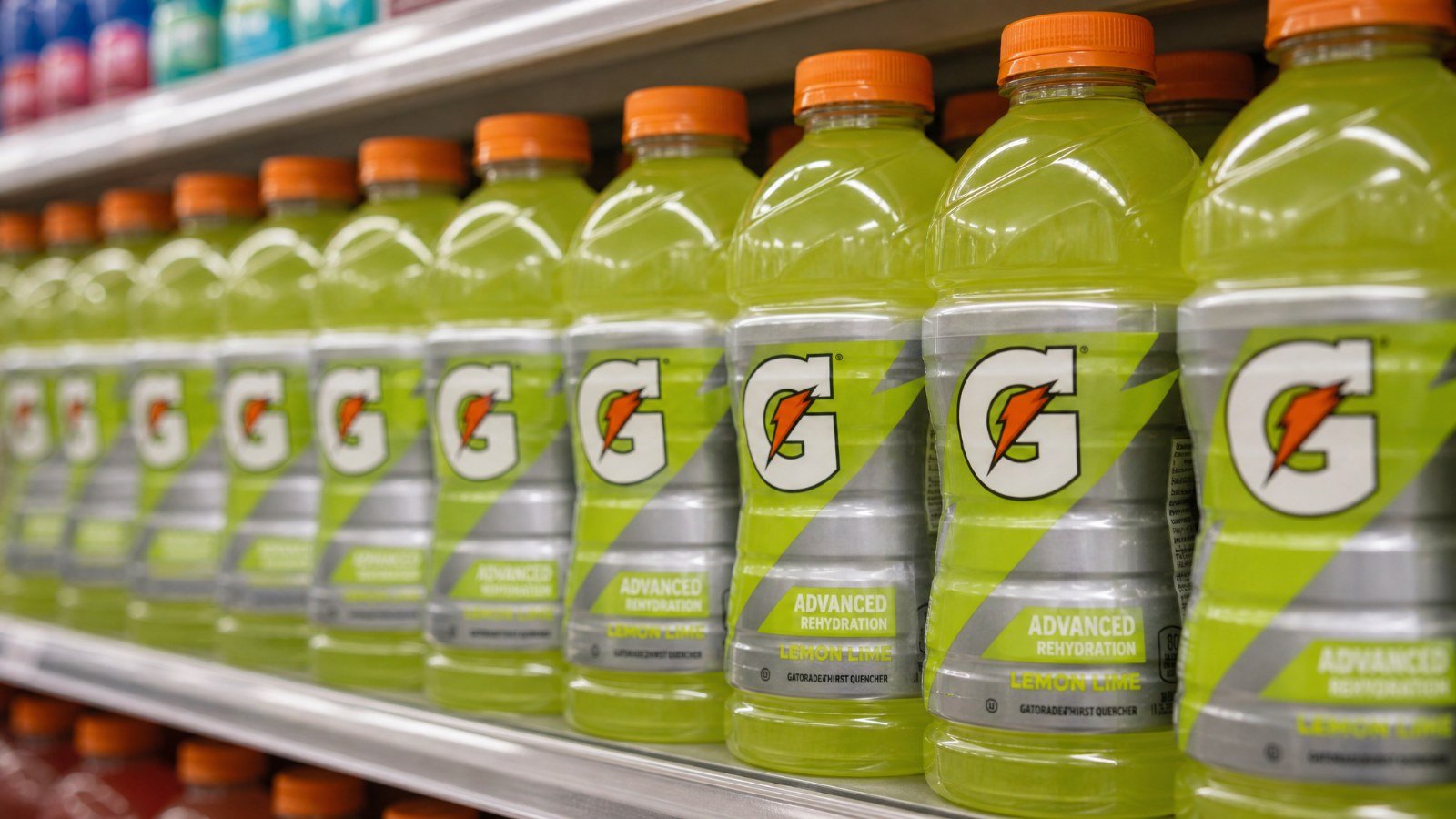
Lead image: AI illustration of 28-ounce Gatorade Lemon Lime bottles, one of four recalled products. It does not show the recalled lots.
Sources
- ABC7 New York: FDA recalls 122,000 cases of Gatorade over undeclared dyes
- CBS News: PepsiCo recalls 122,000 cases of Gatorade due to undeclared dyes
- Powder & Bulk Solids: Gatorade rebrand drops artificial colors
- 21 CFR 7.3: Recall classification definitions
- 21 CFR 7.41: Health hazard evaluation
- 21 CFR 101.22(k): Declaring color additives
- 21 CFR 74.705: FD&C Yellow No. 5 labeling
- 21 CFR 201.20: Yellow No. 5 drug warning
- FDA: How Safe Are Color Additives?
- FDA: Color Additives Questions and Answers for Consumers
- FDA: Food Allergies
- McCann et al., The Lancet, 2007
- EFSA: Evaluation of the Southampton study, 2008
- EU Regulation 1333/2008, Annex V warning label
- California OEHHA press release, April 16, 2021
- FDA: HHS, FDA to phase out petroleum-based synthetic dyes, April 22, 2025