
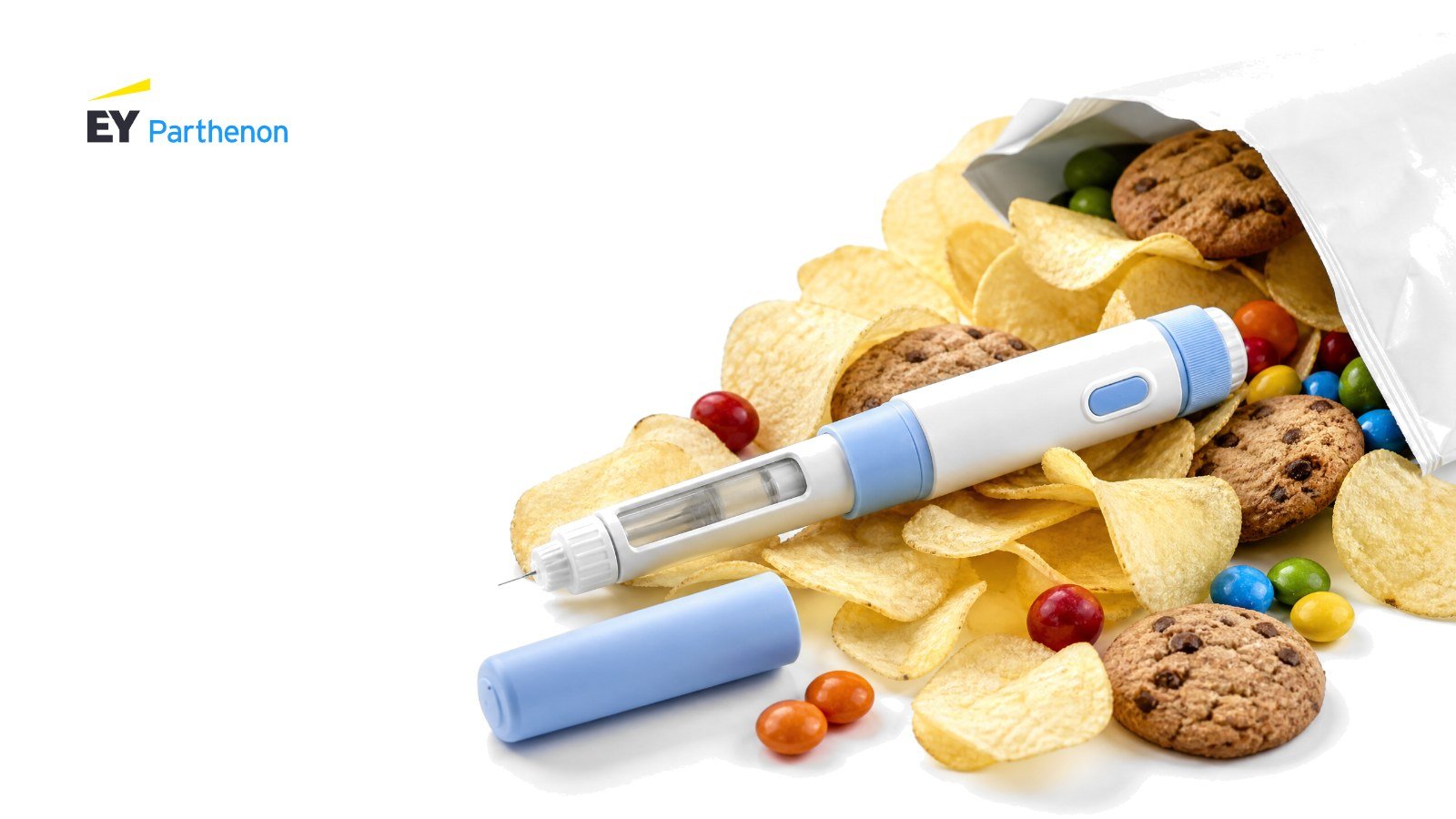
21% of U.S. Adults Have Now Tried a GLP-1, and Snacks Are Taking the Hit
An EY-Parthenon survey found GLP-1 use has jumped from 8% of U.S. adults in 2024 to 21%. Most users say they now eat fewer sweet and salty snacks.

GLP-1 drugs have gone mainstream, and the snack aisle is feeling it. One in five U.S. adults has now tried one.
TLDR
- 21% of U.S. adults have tried a GLP-1, up from 8% in 2024.
- 63% of users eat fewer sweet snacks and 57% have cut back on salty snacks.
- 66% eat more fresh produce and 61% eat more protein.
- EY-Parthenon projects 35% to 40% of U.S. adults will have used a GLP-1 by 2033.
The Survey
EY-Parthenon’s GLP-1 Consumer Impact Report surveyed 14,883 people from the general population and 3,602 current or former GLP-1 users, Food Business News reported. For the first time, more U.S. users (54%) take the drugs mainly for weight management than for diabetes or other health conditions.
What Users Buy Now
- Snacks: 63% eat fewer sweet snacks and 57% eat fewer salty snacks.
- Fresh food: 66% eat more fresh produce and 61% eat more protein.
- Drinks: 51% drink fewer soft drinks, while 44% drink more functional beverages.
- Alcohol: 45% have scaled back and 40% have stopped drinking.
The effect reaches the whole household. 94% of users surveyed are their home’s primary grocery shopper.
What EY Says
“As affordability, access and awareness continue to increase, GLP-1s are changing how consumers live, shop and spend,” said Katie Johnson, EY-Parthenon’s Americas consumer and health industry leader. Don Johnson, a principal at EY-Parthenon, said the best-positioned companies see GLP-1s “as a structural shift in consumer behavior that will influence innovation,” portfolio strategy and investment decisions.
Why It Matters
Snack makers are already feeling this. PepsiCo cut its outlook this month as North American snacks stalled, and brands are racing into protein bars and meat sticks. If 35% to 40% of adults use these drugs within a decade, the snack aisle will look very different.
Source: Food Business News. Read the report.