
AI Is Coming for Your Kitchen. Literally.
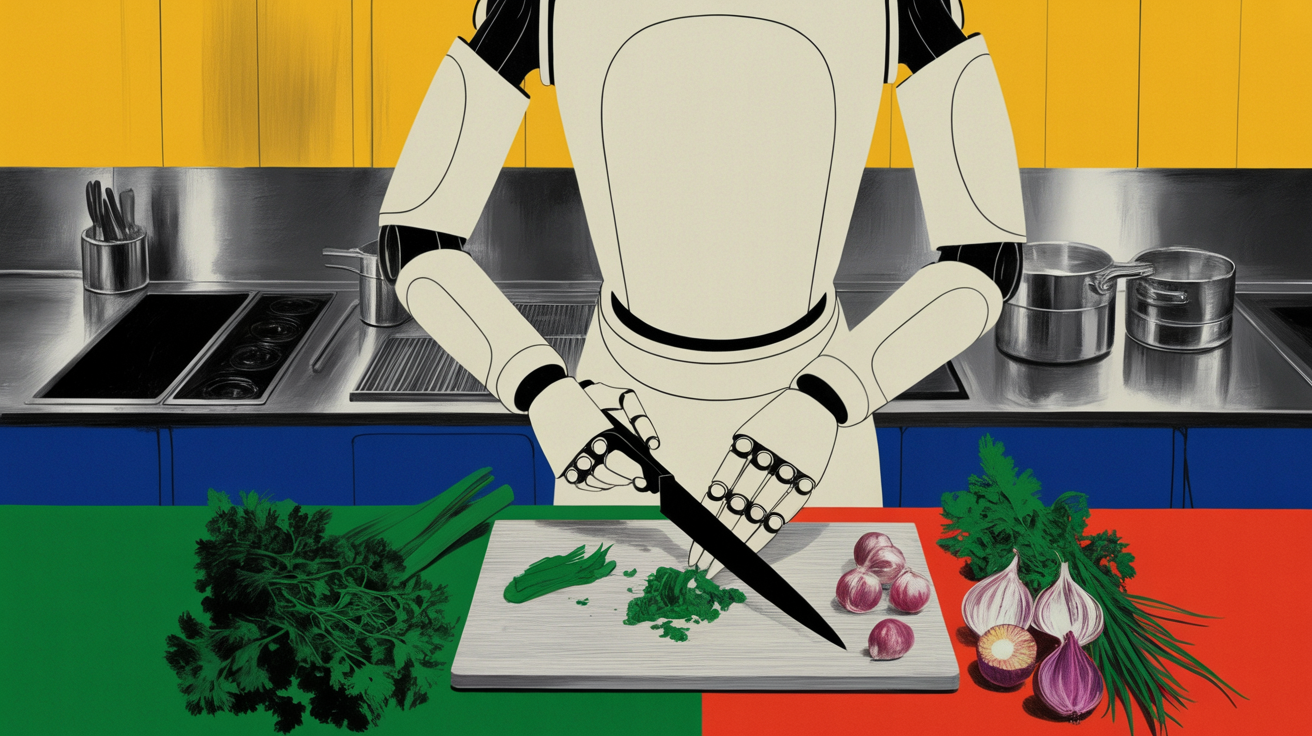
A humanoid robot from startup 1X can now prep dinner. AI robots in food are no longer a trade-show stunt.

Robotics startup 1X just demonstrated a pair of humanoid robots capable of dexterous kitchen tasks, and the food industry should pay close attention. AI robots in food preparation are crossing from prototype to plausible. The gap between lab demo and production line is shrinking faster than most operators planned for.
TLDR
- 1X’s humanoid robots showed credible dexterity in kitchen food-prep tasks.
- Leading economists have formally warned AI will displace significant labor.
- Food operators face both opportunity and workforce disruption simultaneously.
- The demo signals AI robots in food are nearing commercial viability.
- Early adopters in manufacturing may set new cost and speed benchmarks.
AI Robots in Food: From Novelty to Near-Term Threat
Robotics company 1X recently unveiled two humanoid robots with enough dexterity to handle meal preparation. MIT Technology Review flagged the demo as a signal that AI’s encroachment into physical food work is accelerating. Significant.
The timing matters. An open letter from leading economists simultaneously warned that AI poses a credible job-displacement risk across industries. Food manufacturing and foodservice employ millions in repetitive, physical roles. Those roles are exactly where humanoid robots are designed to compete.
What Operators Should Watch Now
1X is not alone. Competitors including Figure AI and Apptronik are also developing general-purpose humanoid platforms targeting industrial and kitchen environments. The race is compressing timelines that operators once assumed were a decade away.
For food manufacturers, the near-term calculus involves more than labor cost. Robots don’t call in sick, don’t require temperature-controlled break rooms, and don’t trigger allergen cross-contact from improper handwashing. Food safety compliance could become a secondary driver of adoption, alongside throughput.
However, capital costs remain steep and integration with existing lines is non-trivial. Early deployments will likely favor high-volume, highly repetitive tasks: portioning, packaging, and assembly. Complex prep, where judgment and texture-sensing matter, is still a harder problem.
The 1X demo is not a finished product. It is a credible proof of concept arriving at a moment when labor costs are elevated and investor appetite for automation is high. Operators who dismiss it as hype are reading the wrong signal. Those who begin scenario-planning now, even informally, will be better positioned when commercial units arrive at scale.
The unsexy truth: the most transformative AI in food won’t announce itself with fanfare. It will show up on a purchase order.
Source: MIT Technology Review. https://www.technologyreview.com/2026/07/29/1140795/the-ai-hype-index-unsexy-ai/