
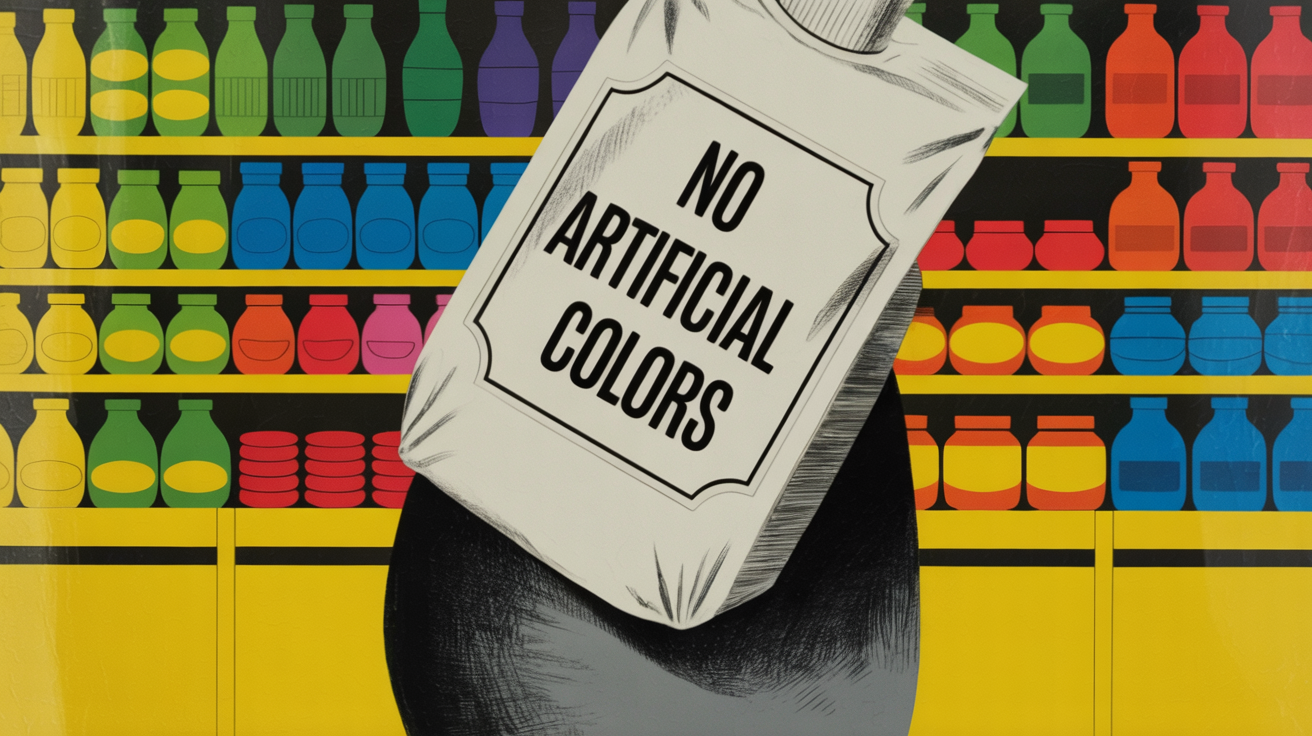
FDA Just Made ‘No Artificial Colors’ Claims Easier
A new FDA guidance lowers the bar for artificial color-free label claims, giving clean-label manufacturers a clearer path to market.

The FDA has quietly shifted the ground under food labeling. The agency is making it easier for manufacturers to declare their products free of artificial colors, a move that hands clean-label operators a concrete regulatory tool.
TLDR
- FDA updated guidance simplifies artificial color-free label claims.
- Clean-label manufacturers gain a clearer, lower-friction compliance path.
- The move signals regulatory alignment with consumer demand for transparency.
- Laggard brands still using synthetic dyes face growing market pressure.
- Industry suppliers of natural colorants stand to benefit most immediately.
FDA Clears a Path for Artificial Color-Free Label Claims
The U.S. Food and Drug Administration issued new guidance easing how food manufacturers can make artificial color-free label claims. Food Business News first reported the development. The update reduces ambiguity that previously made such claims legally risky for many producers.
Specifically, the guidance clarifies which conditions allow a product to carry language indicating the absence of artificial colors. That clarity matters. Operators have long faced inconsistent enforcement interpretations when crafting clean-label packaging language.
What This Means for Manufacturers and Suppliers
For suppliers of natural colorants, including plant-based pigments and fruit-and-vegetable-derived concentrates, the timing is significant. Demand for synthetic dye alternatives has accelerated. Brands that already reformulated are now positioned to communicate that fact more directly on pack.
Brands still relying on Red 40, Yellow 5, or Yellow 6 face a different calculus. Regulatory friction for artificial color-free label claims just dropped. Consumer preference data consistently favors clean-label options. The gap between leaders and laggards is now measurable in aisle.
Additionally, retailers sourcing private-label products should revisit supplier specifications. The updated FDA framework gives buyers stronger grounds to require reformulation as a condition of shelf placement. That leverage is new.
In short, the FDA’s move is less a mandate than a market signal. It rewards brands that moved early and raises the cost of inaction for those that did not. Source guidance and full regulatory language are available directly through the Food Business News report.
Source: Food Business News. URL