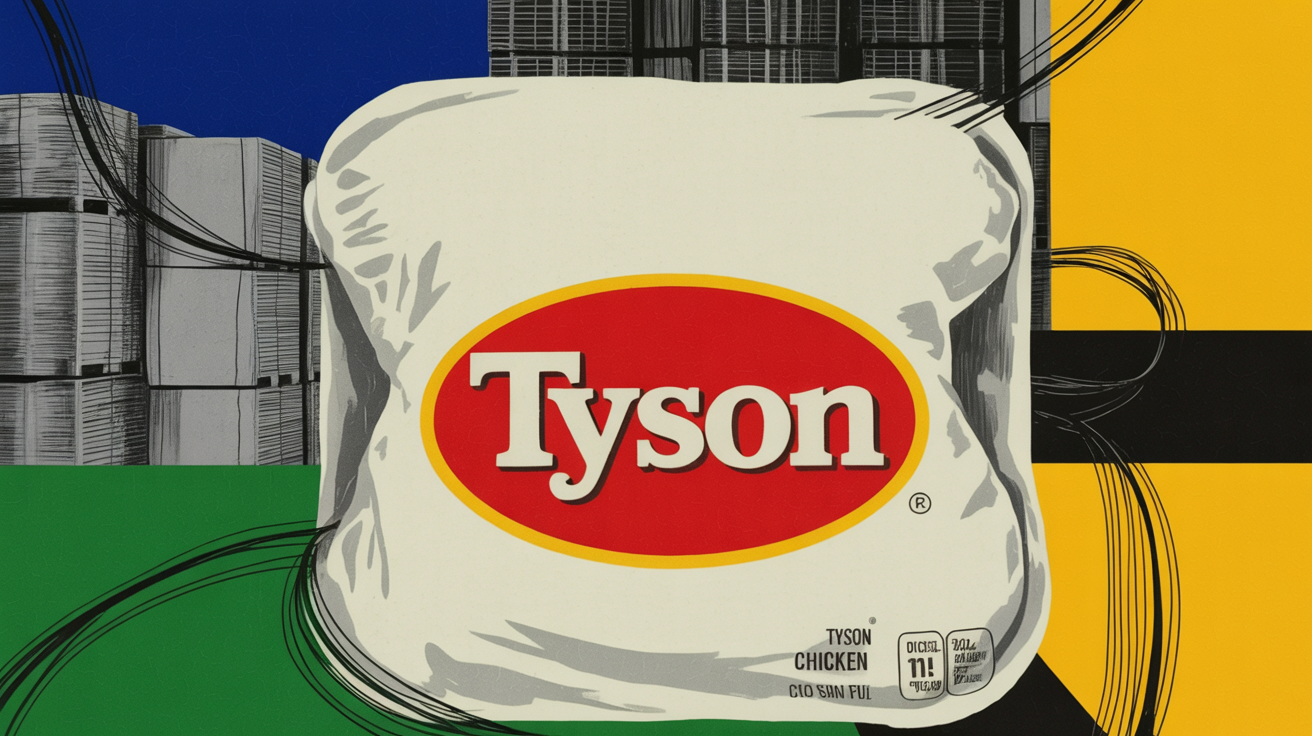
Tyson Has Inflation Modeled. Do You?
Food industry inflation is now a planning assumption, not a surprise. Plus: Ingredion's $3.7B move and AI shifting from system of record to system of action.

Costs aren’t coming down. Tyson Foods has already modeled food industry inflation AI-assisted planning tools can help operators match. This week’s Food Exec Brief from Food Industry Executive covers three signals every manufacturer should be tracking now.
TLDR
- Tyson has inflation baked into forecasts, signaling a structural cost shift.
- China reopening for U.S. beef creates new demand and supply pressure.
- Ingredion’s $3.7B acquisition reshapes the ingredients supply landscape.
- AI is moving from data storage to active operational decision-making.
- ERP modernization is now a margin protection strategy, not an IT project.
Food Industry Inflation and the Cost Permanence Signal
Tyson Foods isn’t waiting for relief. The company has inflation modeled as a persistent condition, not a temporary disruption. That posture separates operators building durable margin structures from those still hoping input costs normalize.
China’s beef market reopening adds another variable. U.S. beef exporters gain demand upside. However, domestic processors face tighter supply and higher raw material competition simultaneously.
Ingredion’s $3.7 billion acquisition reshapes ingredient sourcing options across the sector. Suppliers and formulators should assess how consolidation affects pricing leverage and contract terms. Significant.
AI in Food Manufacturing Moves From Record to Action
The week’s most forward-looking theme is the shift in how AI functions inside food and beverage operations. Food Industry Executive’s roundup highlights a direct question: is your ERP a system of record, or a system of action?
Specifically, the emerging Industry 5.0 framework positions AI as a foresight tool, not just a reporting layer. Operators using AI reactively, to fight fires, are leaving margin on the table. Those deploying it predictively are compressing response time and cutting what one featured resource calls “the invisible plant tax.”
Additionally, food safety performance is now linked directly to proactive, collaborative plant-floor execution. Reactive models carry hidden costs that rarely appear on a single line item. Watch this.
The future of food runs through cleaner supply chains and smarter operations. Both require the same foundation: accurate, real-time data that drives decisions, not just dashboards. Food industry inflation AI integration is the pairing operators can no longer defer.
Source: Food Industry Executive. https://foodindustryexecutive.com/2026/05/food-exec-brief-may-22-2026/