
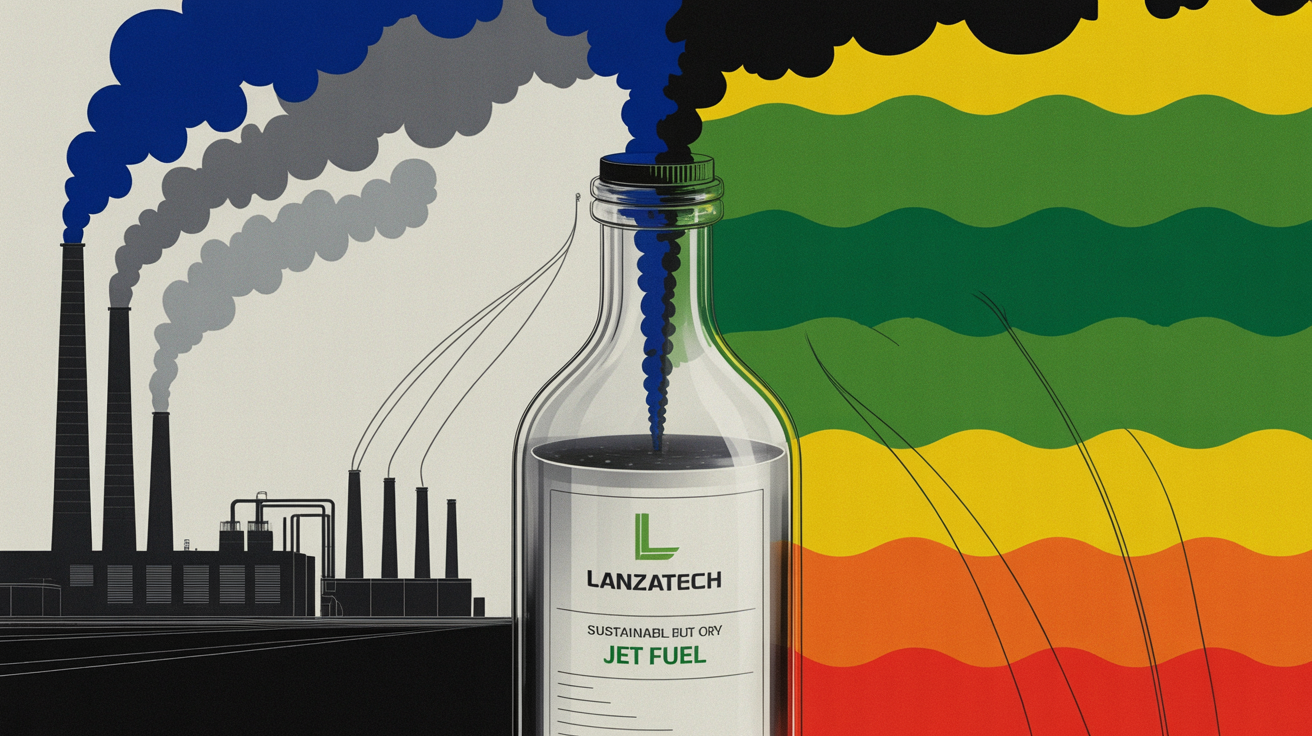
LanzaTech Is Brewing Jet Fuel From Factory Smoke
LanzaTech and DTU's new biofoundry uses carbon emissions gas fermentation to produce biofuels, materials, and more from industrial waste.

Most companies are still figuring out how to measure their carbon footprint. LanzaTech is already fermenting it into jet fuel. The US synbio firm and Denmark’s Technical University just announced a two-year biofoundry partnership built entirely around carbon emissions gas fermentation.
TLDR
- LanzaTech and DTU launch a two-year biofoundry collaboration.
- Waste CO2 becomes biofuels, sustainable materials, and high-value chemicals.
- Gas fermentation positions industrial emitters as feedstock suppliers.
- Food-adjacent ingredient supply chains could benefit from this platform.
- The partnership signals growing commercial viability for carbon-capture biotech.
Carbon Emissions Gas Fermentation Gets a Dedicated Lab
LanzaTech has spent years proving that gas fermentation is more than a lab curiosity. Now, reporting from Green Queen, the company is formalizing that work. The new biofoundry will operate inside DTU’s Bright hub in Denmark. Significant. It gives LanzaTech a European research base to scale microbial conversion of waste CO2 into commercial outputs.
The two-year timeline is deliberate. Both partners want proof-of-concept outputs fast enough to attract industrial partners. Specifically, the facility targets biofuels, sustainable packaging materials, and specialty chemicals. Each of those categories overlaps directly with food-industry supply chains.
What This Means for Food and Ingredient Suppliers
Carbon emissions gas fermentation is not a distant concept for food manufacturers. Fermentation-derived ingredients, bio-based packaging, and low-carbon logistics fuels all trace back to platforms like this one. LanzaTech’s core technology uses microbes to consume carbon monoxide and CO2 gases from industrial flue streams. The output is ethanol and other platform chemicals.
Those chemicals can feed downstream into sustainable ingredient and packaging pipelines that food brands increasingly demand from suppliers. Additionally, biofoundries reduce dependence on petroleum-derived inputs. That matters for any manufacturer under pressure to clean up Scope 3 emissions. Watch this.
The DTU Bright hub brings academic rigor to LanzaTech’s commercial ambitions. However, the real test is whether the partnership produces scalable, cost-competitive outputs within the two-year window. If it does, industrial emitters become feedstock suppliers. That flips the carbon liability narrative entirely.
Source: Green Queen. https://www.greenqueen.com.hk/lanzatech-dtu-bright-biofoundry-carbon-emissions-gas-fermentation/