Skittles Quietly Drops the Additive RFK Jr. Made Famous
Skittles removes titanium dioxide from its formula, as RFK Jr.'s Make America Healthy Again push accelerates additive scrutiny across candy and snack categories.

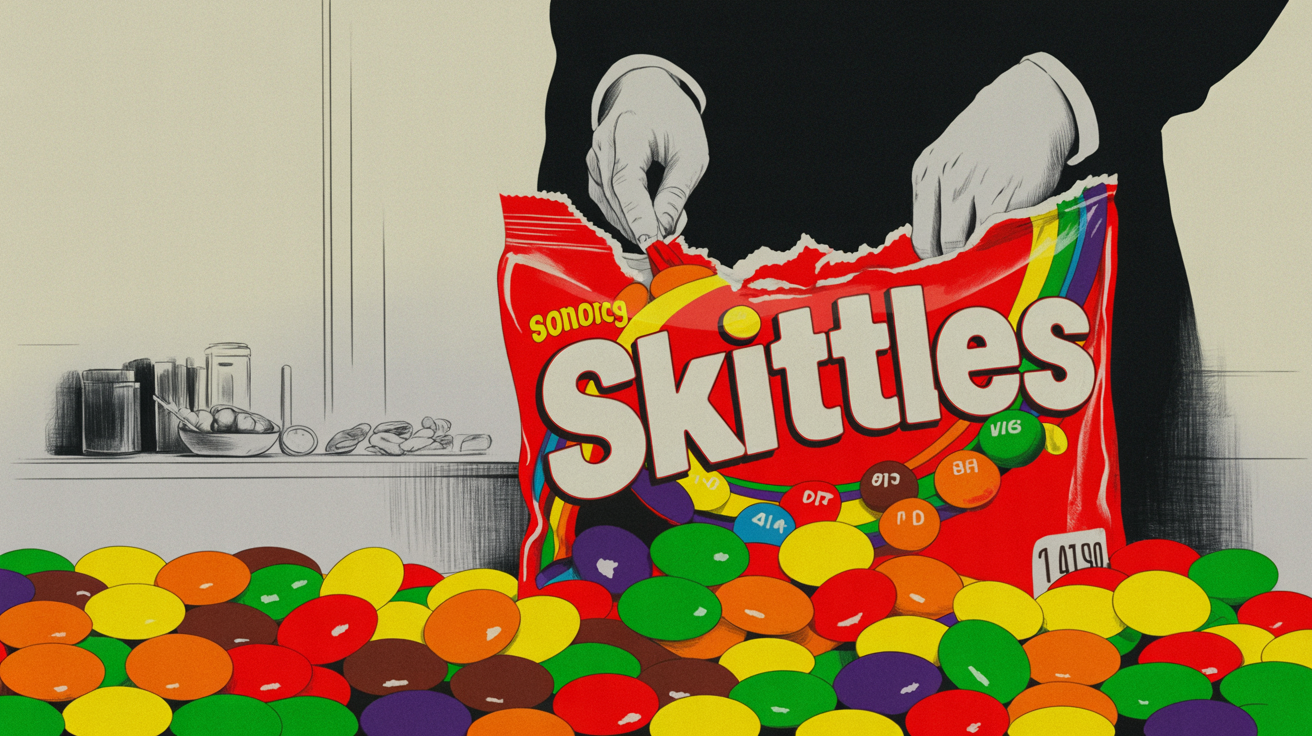
Mars has quietly reformulated Skittles, removing titanium dioxide, the whitening additive that became a flashpoint in RFK Jr.’s campaign against ultra-processed food ingredients. The move signals that regulatory and political pressure on synthetic additives is now moving product lines, not just headlines.
TLDR
- Mars reformulated Skittles to remove titanium dioxide, a contested whitening agent.
- RFK Jr.’s MAHA platform has accelerated brand decisions on flagged additives.
- Titanium dioxide was already banned as a food additive in the EU in 2022.
- The reformulation raises pressure on other candy brands still using the ingredient.
- Clean-label momentum is now reaching mainstream confectionery, not just health food.
Skittles Removes Titanium Dioxide Under Growing Scrutiny
Mars confirmed the reformulation of Skittles, removing titanium dioxide from the candy’s ingredient list. The additive, used to enhance color brightness, has faced mounting criticism from health advocates and regulators alike.
Titanium dioxide is not new to controversy. The European Food Safety Authority flagged it as unsafe for food use in 2021. The EU formally banned it as a food additive in 2022.
In the United States, the FDA still permits titanium dioxide at concentrations up to 1% by weight. However, political pressure has intensified under Health Secretary RFK Jr.’s Make America Healthy Again initiative.
The MAHA Effect on Additive Decisions
RFK Jr. specifically named titanium dioxide among additives he wants removed from American food products. His public targeting of individual ingredients has created a new kind of brand risk. Specifically, companies now face consumer backlash before any formal regulatory action lands.
Mars’s move is notable for its scale. Skittles is a mass-market product with enormous retail distribution across grocery, convenience, and club channels. Reformulating it signals that clean-label pressure has moved well beyond niche or natural product segments.
Additionally, this is not Mars’s first reformulation under scrutiny. The company removed titanium dioxide from Skittles in the UK following the EU ban. The US reformulation lagged by roughly two years.
For operators and suppliers, the gap between international and domestic formulas is increasingly hard to defend. Retailers and foodservice buyers are asking harder questions about ingredient parity across markets.
Watch this space. Other confectionery brands using titanium dioxide, including products from Mondelez and Ferrara Candy, now face the same pressure Mars just acted on. Leaders move first. Others follow or explain why they haven’t.
For more on the regulatory landscape around synthetic additives, see thefutureoffood.org.
Source: MSN via Google News. Read the original article