
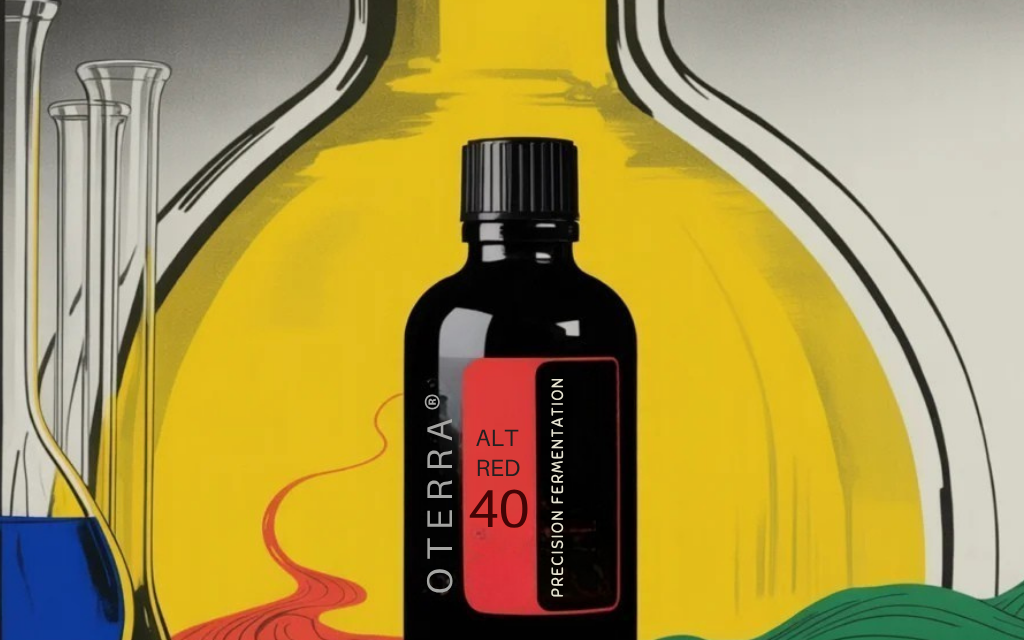
Precision Fermentation Takes Aim at Red 40
Oterra and Debut are developing a precision-fermented Red 40 alternative, targeting synthetic dyes as regulatory and consumer pressure intensifies.

The synthetic dye industry has a new challenger. Oterra, the world’s largest natural color company, has partnered with Debut Biotech to develop a precision-fermented Red 40 alternative, according to Green Queen Media. Red 40 is the most widely used synthetic dye in the U.S. food supply.
TLDR
- Oterra and Debut Biotech are co-developing a bio-based Red 40 replacement.
- Precision fermentation offers scalable, clean-label color without petroleum-derived inputs.
- Red 40 faces mounting scrutiny from regulators and state legislatures.
- Oterra’s scale gives this partnership real commercial reach, fast.
- Synthetic dye alternatives are shifting from niche to mainstream supply chain priority.
A Precision-Fermented Red 40 Alternative Enters Development
Oterra controls a significant share of the global natural color market. Pairing with Debut Biotech, a San Diego-based precision fermentation platform company, signals a serious commercial push. Precision fermentation uses engineered microorganisms to produce specific compounds at scale, without synthetic chemistry.
Red 40, derived from petroleum, is currently found in thousands of products. It has faced bans in several countries and growing state-level restrictions in the U.S. California’s Food Safety Act already restricts several synthetic additives, and Red 40 remains under active scrutiny.
Additionally, the FDA is accelerating its review of synthetic dyes under pressure from the Department of Health and Human Services. The agency announced in early 2025 it would phase out petroleum-based dyes from the U.S. food supply. That timeline creates urgency for manufacturers still relying on Red 40.
Why This Partnership Changes the Supply Equation
Debut’s fermentation platform is designed for rapid strain development and scale-up. Oterra brings global distribution, formulation expertise, and existing relationships with major food and beverage manufacturers. Together, they address both the science and the commercial pathway.
For food operators, a precision-fermented Red 40 alternative could offer cost stability that plant-based colors sometimes lack. Natural colorants like carmine or beet extract carry supply chain volatility. Fermentation-derived pigments can be produced consistently, year-round, independent of agriculture.
In short, this is not a niche clean-label play. It is a supply chain infrastructure move. Manufacturers watching the broader synthetic dye phase-out should treat this partnership as an early signal of where scalable replacement options are heading. Watch this.
Source: Green Queen Media. URL