
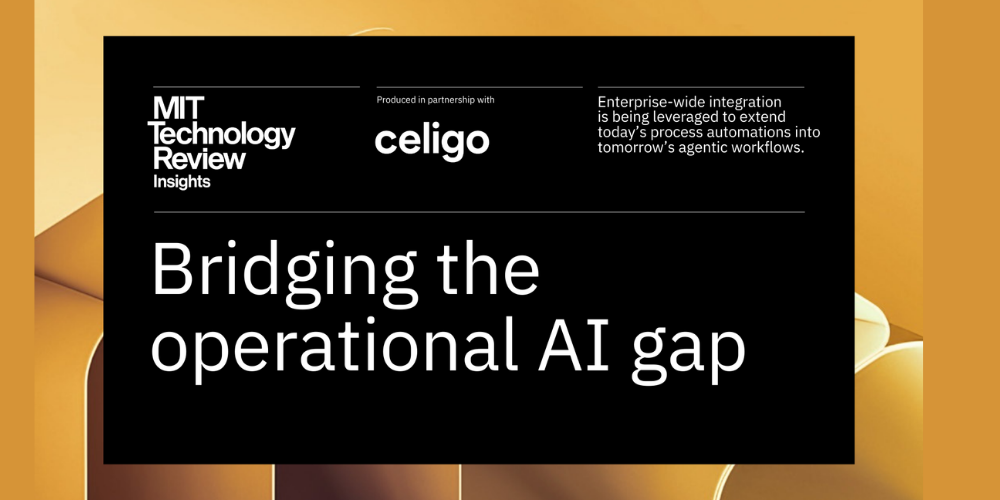

Food companies are shifting AI budgets from pilots to production, but the operational AI gap is exposing real execution risks.
The operational AI gap is widening just as food manufacturers and suppliers commit serious budget to scaling deployments. MIT Technology Review flags the transition from experimentation to production as the critical inflection point most enterprises underestimate.
TLDR
- The hard part isn’t starting an AI pilot — it’s what happens when you try to go live.
- AI that makes decisions on its own is raising big questions about who’s responsible when something goes wrong.
- Food companies that don’t get their data house in order before scaling will pay for it.
Why the Operational AI Gap Hits Food Supply Chains Hard
Food manufacturers face unique pressure when moving AI out of pilots. Regulatory traceability requirements, cold-chain variables, and SKU complexity all compound deployment friction.
MIT Technology Review reports that organizations broadly are redirecting budgets toward production AI. However, infrastructure and talent gaps frequently prevent those investments from delivering.
Specifically, food operators running demand forecasting or quality-inspection pilots often discover that real-time data pipelines are not production-ready. The gap between a controlled test and a live plant floor is significant.
Watch this.
Agentic AI introduces another layer of risk. These systems make sequential decisions autonomously, which raises accountability questions in regulated food environments.
Additionally, supplier networks add data-quality variability that undermines model performance at scale. A system trained on clean pilot data can degrade quickly when exposed to messy, real-world inputs.
Closing the Operational AI Gap Requires Structural Readiness
Organizations that succeed treat AI deployment as an operational change program, not a technology project. That distinction matters for procurement, quality, and compliance teams alike.
As a result, food companies should audit data infrastructure before committing production budgets. The Future of Food has covered how data readiness separates AI leaders from laggards in food manufacturing.
In short, the momentum is real. Budgets are moving. But execution discipline will determine which food operators capture value and which absorb costly failures.
The companies that close the operational AI gap fastest will treat it as a supply chain problem, not a software problem. That reframe is the competitive edge.
Source: MIT Technology Review. https://www.technologyreview.com/2026/03/04/1133642/bridging-the-operational-ai-gap/