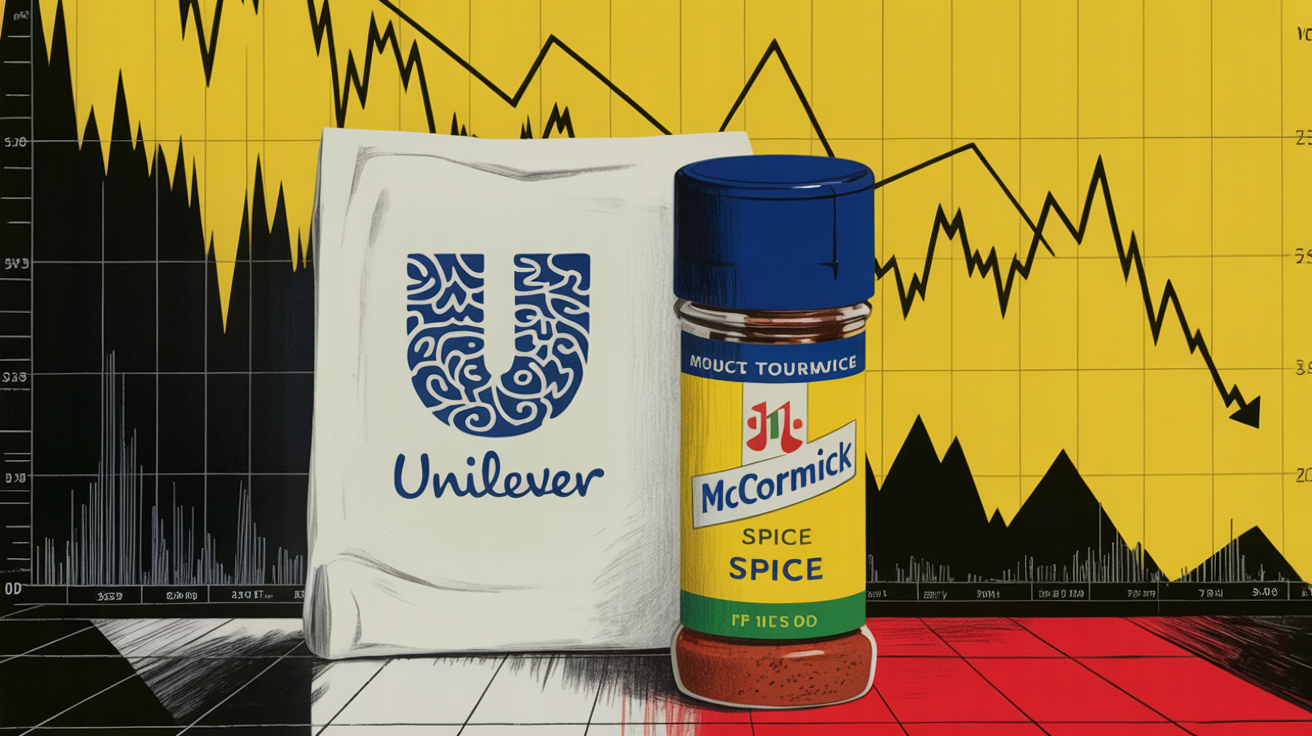

Terry Smith doesn’t exit quietly. The departure of Unilever’s most prominent major shareholder, triggered by the proposed $40 billion merger with McCormick, signals something operators should watch closely. The Unilever McCormick merger is now a referendum on whether Big Food’s restructuring wave is creating value or destroying it.
TLDR
- Terry Smith, a major Unilever shareholder, has exited over the McCormick deal.
- The $40B price tag is drawing scrutiny over industrial logic and long-term fit.
- Unilever shares have struggled to recover since the deal was announced.
- Big Food restructurings face growing investor skepticism about genuine value creation.
- Suppliers and co-manufacturers should monitor portfolio shifts from this merger.
Why the Unilever McCormick Merger Is Dividing Investors
FoodNavigator reports that Unilever’s plan to merge its Foods division with McCormick has unsettled shareholders at scale. Terry Smith’s exit is the loudest signal yet. Smith is not a reactive investor. His departure reflects a calculated judgment that the deal’s industrial logic does not hold.
Unilever’s Foods business includes brands built on taste, convenience, and legacy positioning. McCormick’s portfolio is anchored in spices, flavor systems, and foodservice supply chains. Critics argue the overlap is thin. Supporters say the combined scale creates a global flavor powerhouse. Neither side has moved markets in a positive direction.
Big Food Restructuring Faces a Credibility Test
The Unilever McCormick merger sits inside a broader wave of Big Food break-ups and portfolio reshuffles. Investors are no longer giving automatic credit for scale moves. They want proof that restructuring delivers margin improvement, category focus, and cleaner brand positioning.
For food-industry operators and suppliers, the stakes are practical. A merged Unilever-McCormick entity would control significant shelf space across retail and foodservice globally. Supply chain relationships, co-manufacturing agreements, and ingredient sourcing could all shift. Specifically, flavor and seasoning suppliers should model exposure now.
Unilever’s share price has not recovered since the announcement. That is a market signal, not a footnote. The Future of Food has tracked how consumer-facing clean-label pressure increasingly intersects with investor-facing portfolio pressure. Both forces are now pointing at the same companies simultaneously.
In short, the deal is not just a financial story. It is a signal about where Big Food’s confidence in its own strategy actually stands. Watch this.
Source: FoodNavigator. https://www.foodnavigator.com/Article/2026/05/14/unilever-40bn-mccormick-deal-sparks-investor-exit-and-shareholder-backlash/