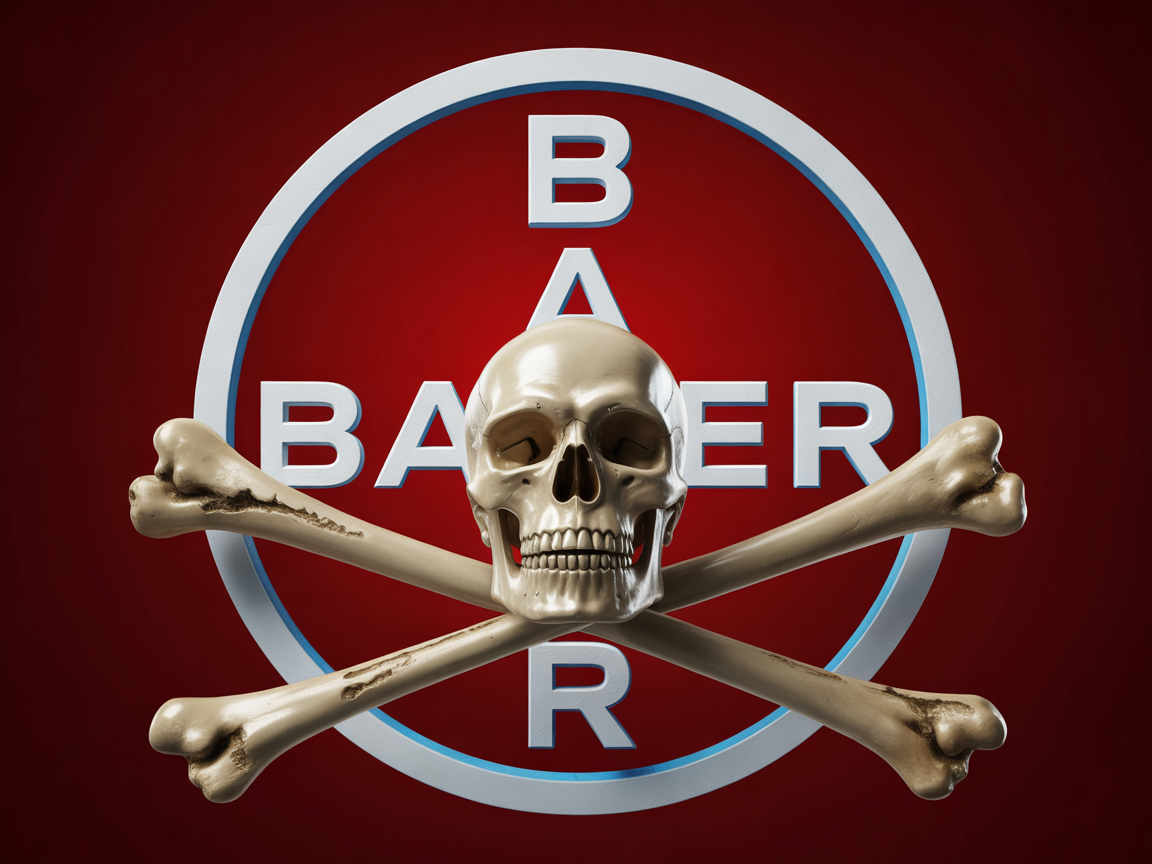

Today’s Beyond Pesticides deadline, an April Supreme Court case, and decades of documented corporate misconduct converge in the most important food safety story your newspaper isn’t covering.
Today at 5:00 PM Eastern, a coalition of grassroots organizations, health advocates, farmers, and food industry professionals loses its window to sign a public statement with one demand: chemical companies must be held accountable when they knowingly poison people and don’t warn them.
The statement, organized by Beyond Pesticides, will be delivered tomorrow, the same week the U.S. Supreme Court begins considering whether to strip Americans of exactly that right. Forever.
The case is Monsanto Company v. Durnell. Oral arguments are April 27. A decision is expected in June.
If you haven’t heard of it, that is not an accident.
The Man in the T-Shirt
John Durnell watched television commercials in the 1990s and 2000s showing people applying Roundup weed killer in t-shirts and shorts. The ads said it was safe. He used it on a community garden. He got non-Hodgkin’s lymphoma. A Missouri jury awarded him $1.25 million and agreed that Monsanto failed to warn him of the cancer risk.
Monsanto (now owned by German pharmaceutical giant Bayer, which acquired it in 2018 for $63 billion) appealed. Missouri courts kept affirming the verdict. Bayer petitioned the U.S. Supreme Court.
Bayer’s argument to the nation’s highest court: “Once EPA makes that judgment, the label is the law.” Because the EPA approved a Roundup label without a cancer warning, no state court can hold them liable for cancer. They influenced the regulatory process, obtained a favorable label, and now point to that label as proof of innocence.
A peer-reviewed journal retracted a widely cited 2000 glyphosate safety study late last year after it was discovered that Monsanto helped write it. The science saying it was safe — they authored it themselves.
The Scoreboard
This didn’t start with John Durnell.
Over 100,000 Roundup claims have been settled for approximately $11 billion. Juries have awarded over $8 billion in additional trial verdicts. Individual jury awards have reached $2.1 billion in a single case. Bayer’s total litigation reserves now exceed $16 billion. The company secured an $8 billion bank loan just to fund their latest proposed settlement.
In February 2026, Bayer proposed a $7.25 billion class settlement — structured to pay out over 21 years — timed precisely before the Supreme Court hearing. Cancer victims now face a binary choice: take the guaranteed payout, or risk getting nothing if SCOTUS rules for Bayer in June. Increasingly, lawyers are advising clients to take the deal.
That timing is not coincidence. That is chess.
The Hostage Note
Last August, Bayer announced it might be forced to stop all U.S. glyphosate production unless regulatory changes were made to reduce litigation pressure.
A foreign corporation threatened to abandon production of a chemical linked to cancer in tens of thousands of Americans — unless the U.S. government protected it from the cancer victims suing it in American courts.
Bayer mines elemental phosphorus in Soda Springs, Idaho and finishes production in Luling, Louisiana. Three American communities. Real workers. Real families. Used as leverage.
The profits flow to Leverkusen, Germany.
On February 18, 2026, President Trump invoked the Defense Production Act — declaring glyphosate a matter of national security and citing liability immunity provisions that handed Bayer new legal ammunition against the very cancer victims whose day in court is now in jeopardy.
Bayer cited that executive order in its Supreme Court brief five days later.
The Money Trail
None of this happened organically.
Federal disclosures show Bayer spent $9.19 million lobbying Congress and federal agencies in 2025 alone, deploying 45 registered lobbyists across 13 firms. Bayer donated $2 million directly to Trump’s inaugural fund. Trump’s deputy assistant for economic policy — the person who converts the President’s agenda into federal policy — spent years at a law firm that represented Bayer on Roundup settlements and represented Monsanto in dicamba cases. The Deputy Secretary of Agriculture came from a firm that represented Bayer on the Monsanto acquisition itself.
The executive order followed.
This is not speculation — it’s in the public record. A foreign corporation paid $2 million to attend the inauguration, deployed 100 lobbyists across two years, seeded the administration with their own former lawyers, and received a wartime executive order protecting them from American cancer victims in return.
For a full breakdown of who was sitting at that table — and why their resumes disqualify every one of them from any conversation about public health — read our earlier investigation: Bayer & The EPA: More Than Just A Secret Meeting.