Amazon Claims No. 2 Grocer. No Stores Required.
Amazon's grocery business topped $150 billion in gross sales last year, cementing its Amazon grocery market share claim without a meaningful store footprint.

Amazon just told the world it is the second-largest grocer in the United States. It did so with almost no stores. The Amazon grocery market share claim, anchored by $150 billion in gross sales, reframes what grocery scale actually means in 2025.
TLDR
- Amazon claims No. 2 U.S. grocery status on $150B+ in gross sales.
- Brick-and-mortar presence leans almost entirely on Whole Foods.
- The claim signals that digital volume now rivals physical retail scale.
- Suppliers and operators must rethink what ‘shelf presence’ means.
- Traditional grocers face a competitor that doesn’t need their playbook.
Grocery Dive reported the disclosure this week, citing Amazon’s own characterization of its grocery business. The $150 billion gross sales figure covers fiscal year 2024. That number puts Amazon ahead of every traditional grocer except Walmart.
Amazon Grocery Market Share Built Without a Store Network
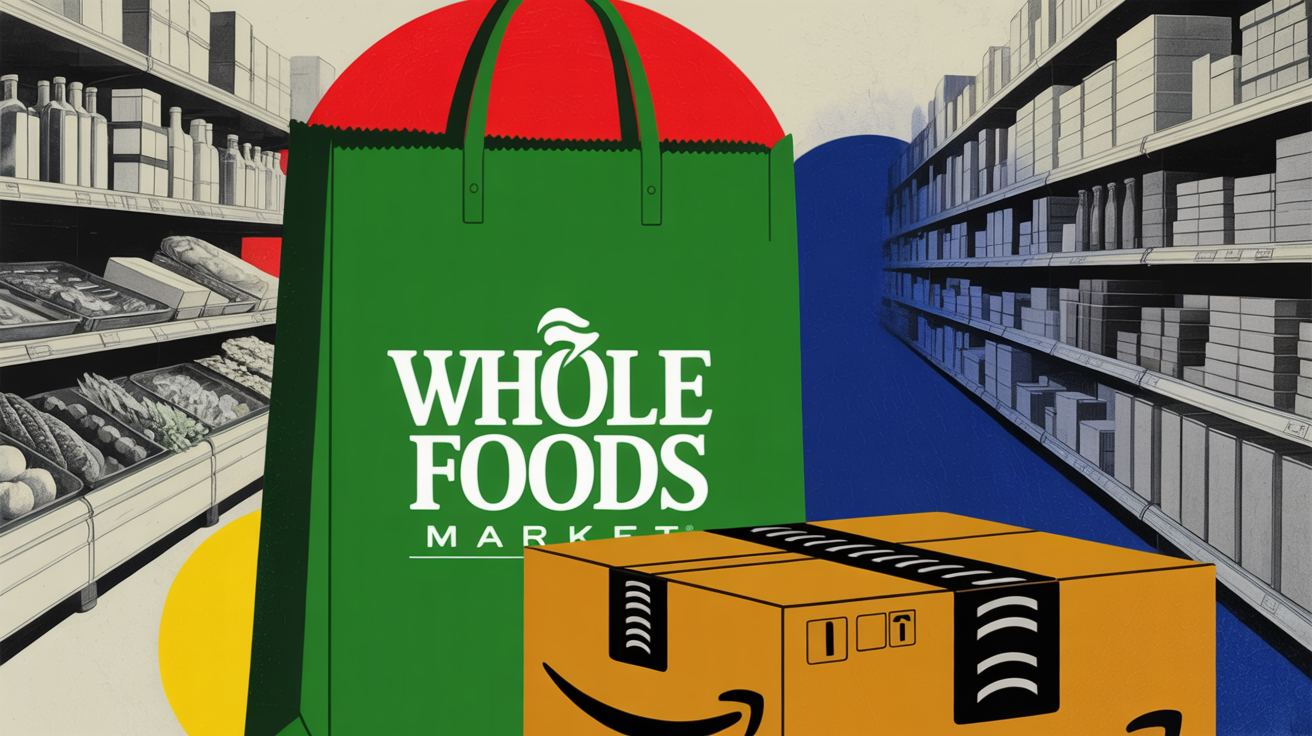
Whole Foods operates roughly 530 locations across North America. That is a specialty footprint, not a mass-market one. Amazon Fresh, the company’s conventional grocery banner, has struggled to scale, with store openings stalled and some locations closed in recent years.
Yet the gross sales figure holds. Online grocery, Prime delivery, and third-party marketplace volume carry the weight. Significant.
For food manufacturers and suppliers, the implication is direct. Amazon’s virtual shelf commands the same revenue gravity as a top-two physical retailer. Assortment decisions, search placement, and review scores now carry the stakes of a major retail listing.
What This Means for Clean-Label Brands and Transparent Supply Chains
Amazon’s platform rewards discoverability. Brands with clear ingredient lists, strong certifications, and readable labels perform better in algorithm-driven search than legacy SKUs buried in fine print. That dynamic aligns with the clean-label shift accelerating across retail.
However, Amazon’s scale also amplifies private-label competition. Its own grocery brands sit at the top of search results. Suppliers without differentiated positioning face margin pressure from a retailer that is also a manufacturer.
Traditional grocers built their No. 2 and No. 3 rankings over decades of real estate investment. Amazon built its claim on logistics and data. Watch this.
The question for operators is no longer whether Amazon belongs in their competitive set. It does. The question is whether their digital shelf strategy matches the urgency that a $150 billion competitor demands. Grocery Dive has the full breakdown.
Source: Grocery Dive. https://www.grocerydive.com/news/the-friday-checkout-amazon-says-its-the-second-largest-us-grocer-stor/819019/