
NASA’s Mars Menu Problem Is Bigger Than You Think
For a Mars mission, NASA is rethinking its entire food system. Shelf life, nutrition, and palatability all face hard limits in deep space.

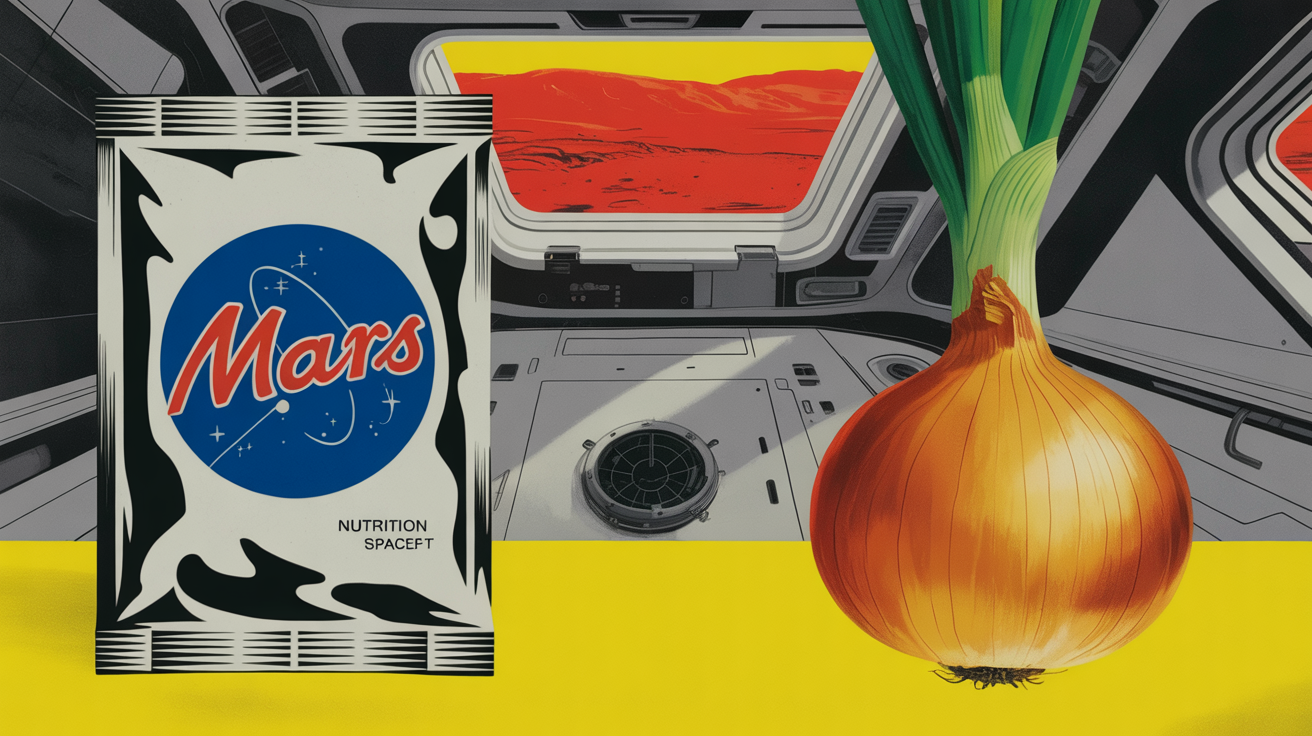
An astronaut eating a raw onion and calling it delicious sounds like a punchline. It isn’t. The Spoon reports that NASA is now confronting a genuine food system crisis as it eyes crewed Mars missions, where resupply is impossible and current space food technology falls dangerously short.
TLDR
- Mars missions could last three years; current space food degrades faster.
- Nutrient loss in packaged space food is a documented, serious problem.
- NASA is exploring fresh food production and novel preservation methods.
- The challenge reshapes what ‘shelf-stable’ means for food manufacturers.
- Palatability and crew morale depend directly on food quality in isolation.
NASA Mars Mission Food Faces a Three-Year Shelf-Life Wall
Current NASA food systems were engineered for low-Earth orbit. The International Space Station receives regular resupply missions; Mars offers no such safety net.
A crewed Mars mission could last up to three years round-trip. Packaged space food today typically degrades in nutritional quality well before that timeline ends.
Vitamin C, for instance, breaks down significantly in thermostabilized pouches over 18 to 24 months. Crew members on a Mars mission could arrive nutritionally compromised before they land.
That is not a minor inconvenience. It is a mission risk.
Rethinking Preservation, Palatability, and the NASA Mars Mission Food System
NASA researchers are now exploring bioregenerative food systems, where crops grow aboard the spacecraft. Lettuce, radishes, and dwarf wheat are among the candidates already tested on the ISS.
However, fresh production alone cannot meet full caloric needs in microgravity. It supplements; it does not replace.
Preservation technology is also under review. Freeze-drying remains standard, but newer approaches including novel packaging atmospheres and encapsulation are drawing research interest.
Palatability matters more than engineers once assumed. Isolation studies show that food variety and sensory satisfaction directly affect crew psychology and performance over long missions.
The raw onion anecdote from The Spoon’s reporting is telling. Taste perception shifts in microgravity; flavors astronauts once found sharp or unpleasant can become appealing. Food developers designing for space must account for a moving sensory target.
For food-industry operators, the NASA Mars mission food challenge is a stress test of what clean-label, nutrient-dense, long-life food can actually deliver. The solutions developed here will have direct downstream applications in emergency preparedness, military rations, and remote-location food supply chains.
Leaders in high-pressure preservation and clean-label shelf-stable innovation are already better positioned than competitors still relying on legacy stabilizer systems. The Mars timeline is a forcing function. It rewards suppliers who have already done the hard work on nutrient retention and ingredient integrity.
NASA’s food problem, in short, is the food industry’s next frontier.
Source: The Spoon. https://thespoon.tech/as-nasa-eyes-mars-its-rethinking-how-astronauts-will-eat/