
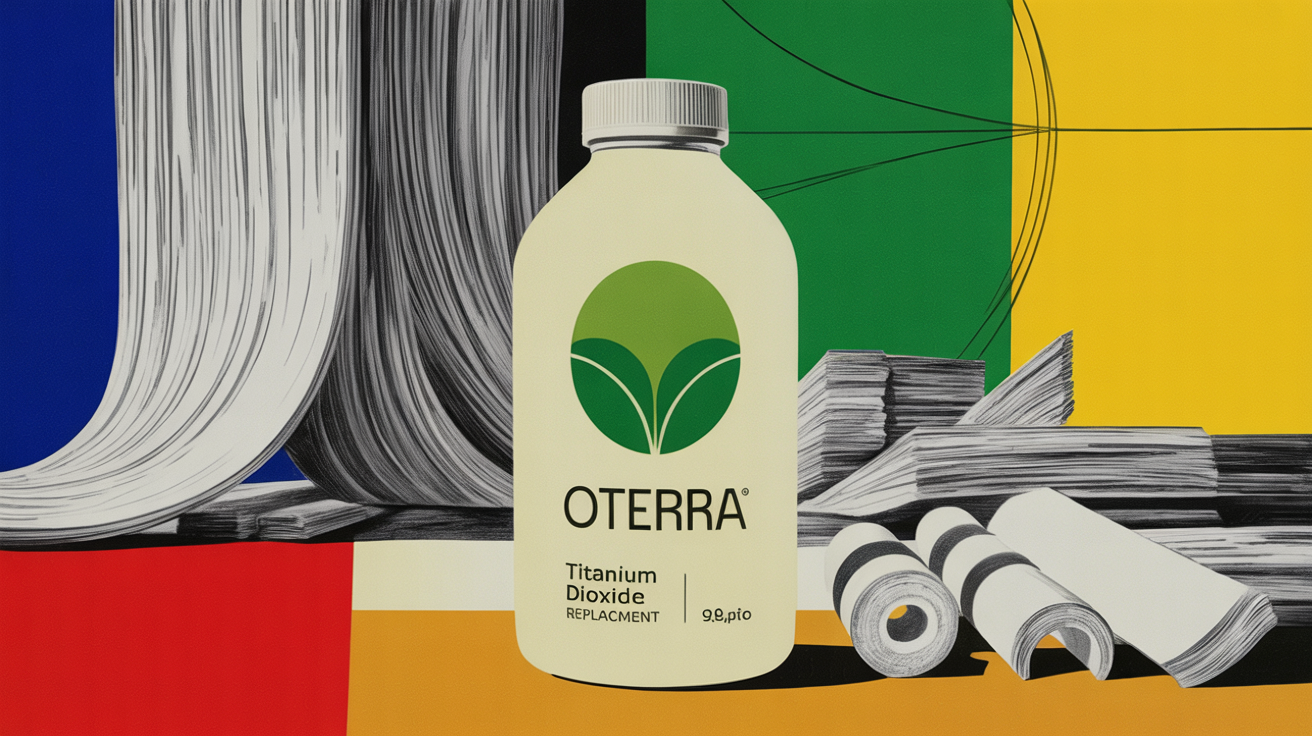
White Is the Hardest Color to Replace. Seprify Just Did It.
A Cambridge-Fribourg spinout raised €13.4M to commercialize a plant-based titanium dioxide alternative made from FSC-certified wood pulp.

The EU ban on titanium dioxide didn’t give manufacturers a grace period. It gave them a deadline. Swiss biomaterials startup Seprify, reporting to vegconomist.com, says reformulation is now an immediate operational requirement, not a roadmap item.
TLDR
- EU ban on titanium dioxide forces urgent reformulation across food categories.
- Seprify’s cellulose-based pigment replicates opacity and brightness from wood pulp.
- The startup closed a €13.4M Series A to scale its plant-based solution.
- A partnership with Oterra gives global distribution reach to manufacturers.
- White is technically the hardest food color to replace, Seprify’s CEO confirms.
The Titanium Dioxide Alternative Manufacturers Actually Need
White is not a decorative afterthought in food manufacturing. It provides opacity, brightness, and visual cues consumers associate with freshness and quality. Titanium dioxide (E171) delivered all three reliably for decades. Then the EU banned it.
Seprify, a Marly, Switzerland-based startup spun out of the University of Cambridge and the University of Fribourg, produces cellulose-based white pigments derived from FSC-certified wood pulp. The material is designed to match the optical performance of titanium dioxide without the regulatory and safety concerns that drove the EU ban.
Co-founder and CEO Dr. Lukas Schertel is direct about the stakes. Reformulating away from titanium dioxide, he told vegconomist.com, is no longer a future consideration. It is an immediate requirement.
€13.4M and a Global Distribution Partner
Seprify recently closed a €13.4 million Series A round. The funding will support scale-up and commercial deployment of its cellulose pigment platform. Significant.
The company has also partnered with Oterra, a natural color supplier with established global reach. That partnership matters operationally. Manufacturers don’t just need an ingredient; they need a supply chain that can deliver at volume and meet regional regulatory standards.
Additionally, the clean-label implications are real. A plant-based, FSC-certified wood-pulp ingredient clears the transparency bar that synthetic additives cannot. For operators reformulating under EU pressure, Seprify’s solution addresses compliance and clean-label positioning simultaneously.
In short, the companies moving fastest on titanium dioxide reformulation will hold a shelf and regulatory advantage over those still treating it as a future problem.
Source: vegconomist.com. https://vegconomist.com/interviews/seprify-reformulating-away-from-titanium-dioxide-no-longer-future-consideration-immediate-requirement/