
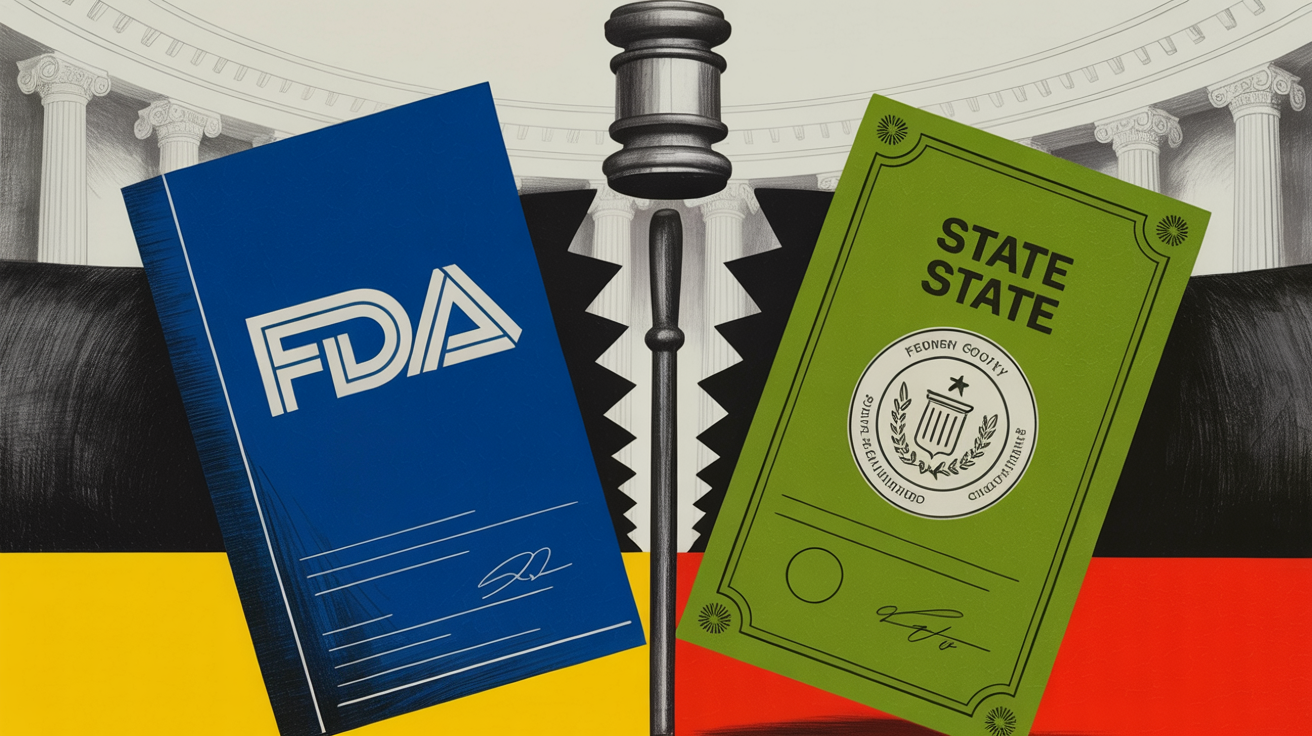

A quiet but consequential bill is moving through Washington. The FRESH Act proposes federal food regulations that would supersede state authority over GRAS additives and chemical ingredients. Food Safety News flags it as one of the most contested regulatory proposals in recent memory.
TLDR
- The FRESH Act would give federal rules supremacy over state food safety laws.
- GRAS allowances could be amended under the bill’s new framework.
- States like California have led on food chemical bans the feds haven’t matched.
- Operators face uncertainty as federal and state standards may diverge sharply.
- Industry suppliers must track which regulatory body holds final ingredient authority.
The FRESH Act and the GRAS Authority Debate
The proposed FDA Review and Evaluation for Safe and Healthy foods legislation, known as the FRESH Act, targets one of food regulation’s most contested frameworks. GRAS, or Generally Recognized as Safe, has long allowed manufacturers to self-certify ingredient safety without formal FDA review. Critics call that a loophole. Supporters call it workable science.
The bill’s most divisive provision is federal preemption. It would override state-level food safety rules where federal standards exist. That matters enormously for operators selling across multiple states.
State vs. Federal: What Operators Need to Know
California, in particular, has moved faster than federal regulators on chemical ingredient restrictions. Its food additive bans have forced reformulations that the FDA had not yet required. The FRESH Act could neutralize that state-level pressure entirely.
Additionally, amended GRAS allowances under the bill could expand or restrict which ingredients qualify for self-certification. Suppliers building clean-label portfolios need clarity on which thresholds survive the proposed changes. Significant.
The patchwork problem cuts both ways. Uniform federal standards reduce compliance complexity for national brands. However, they also remove the competitive incentive that state-level strictness creates for cleaner formulations. Leaders who reformulated ahead of California’s rules already hold the advantage. Watch this.
Source: Food Safety News. https://www.foodsafetynews.com/2026/05/gras-additives-chemicals-who-should-hold-the-authority/