States Gave FDA the Data. Now FDA Won’t Share It Back.
The FDA state communication gap is widening. AFDO's executive director says the agency is withholding data that states themselves originally collected.

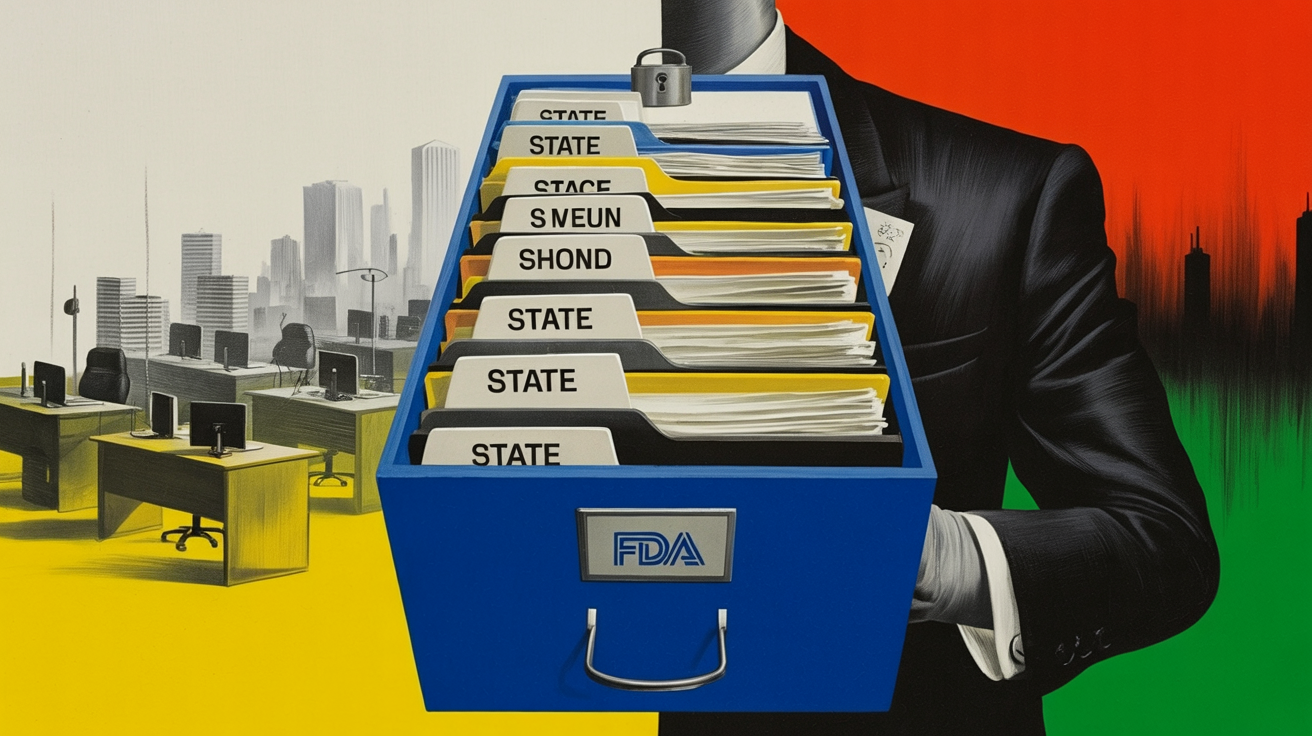
States hand their food safety data to the FDA. Then the FDA refuses to share it back. Steven Mandernach, executive director of the Association of Food and Drug Officials, is calling out the contradiction publicly.
TLDR
- FDA withholds data that state agencies originally gathered and submitted.
- AFDO’s leader says the communication breakdown creates real public health risk.
- States are left operating blind on investigations they helped initiate.
- The gap signals a structural problem inside FDA’s information-sharing protocols.
- Industry operators face compounding uncertainty when federal-state coordination fails.
Steven Mandernach didn’t mince words. Writing on behalf of the Association of Food and Drug Officials (AFDO), he identified a core dysfunction inside the federal food safety system: the FDA state communication gap.
The problem is specific. FDA regularly restricts information it shares with state regulators. That restriction applies even when the original data came from those same state agencies.
The FDA State Communication Gap Is Structural, Not Incidental
Mandernach’s framing matters here. This isn’t a bureaucratic lag or a staffing issue. It’s a policy constraint that blocks states from accessing intelligence they themselves generated.
State agencies conduct inspections, collect samples, and flag early signals of contamination. They report findings up to FDA. Then, during active investigations, FDA often cannot legally or procedurally return that information downstream.
The result: states lose visibility into cases they opened. Operators in those states face a fragmented response. Coordination breaks down precisely when speed matters most.
What This Means for Food Industry Operators
For manufacturers and suppliers, the FDA state communication gap creates compounding risk. A state inspector may flag a facility. FDA may open a broader investigation. But the originating state agency may not learn the outcome, or the scope, until it’s public.
That delay affects recall coordination, corrective action timelines, and supplier verification programs. Operators relying on state-level oversight as part of their food safety infrastructure should note the gap is real and documented.
Mandernach’s statement is a formal signal. AFDO represents food and drug officials across all 50 states. When its executive director publicly challenges FDA’s communication posture, the industry should treat it as a structural warning, not a political complaint.
The fix requires FDA to revisit its information-sharing protocols, not just its messaging. Watch this.
Source: Food Safety News. https://www.foodsafetynews.com/2026/04/leader-of-food-and-drug-officials-group-says-fda-needs-to-communicate-better-with-states/