
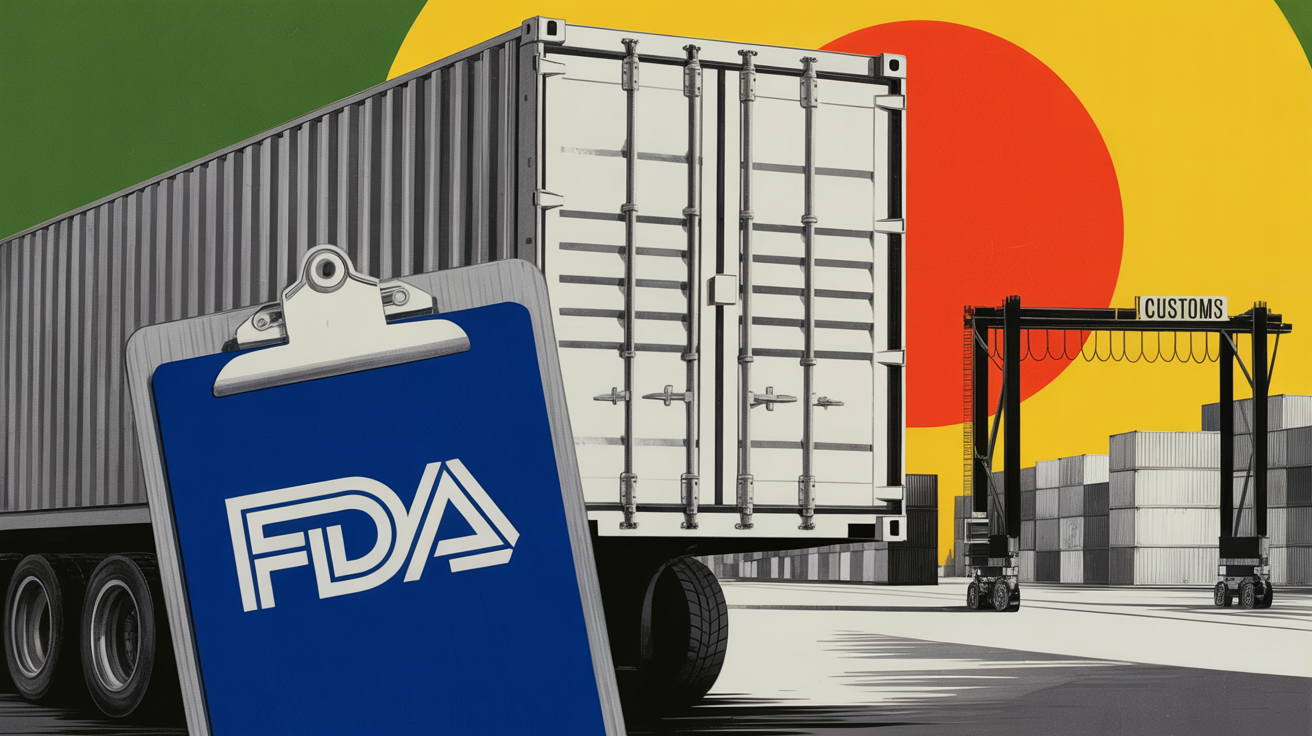
FDA Is Blocking More Imports. Are You on the List?
FDA is escalating import enforcement on illegal colors, undeclared allergens, and pesticide violations, signaling tougher scrutiny for foreign suppliers.

Food Safety News reports that FDA is intensifying its import enforcement action against three specific violation categories: illegal synthetic colors, pesticide residues, and undeclared allergens. This is not a routine update. Suppliers and importers who haven’t audited their incoming product documentation recently should start now.
TLDR
- FDA is targeting illegal color additives in imported food products.
- Undeclared allergens remain a top enforcement trigger at the border.
- Pesticide residue violations are drawing increased FDA scrutiny.
- Importers face automatic detention without physical examination.
- Domestic buyers share liability when non-compliant product enters supply chains.
FDA Import Enforcement Action Targets Three Violation Categories
FDA’s stepped-up import enforcement action focuses on illegal color additives, pesticide residues, and undeclared allergens. These three categories consistently rank among the agency’s highest-risk import violations. The agency uses Import Alerts to place products or suppliers on automatic detention, stopping shipments before they reach domestic distribution.
Illegal synthetic colors are a recurring problem in imported snacks, confections, and beverages. Many colors approved in other markets are explicitly banned in the United States. Suppliers sourcing finished goods internationally must verify color compliance against FDA’s permitted additives list, not just country-of-origin standards.
Allergens and Pesticides Drive Escalating Border Scrutiny
Undeclared allergens represent one of the most serious food safety failures an importer can face. FDA can issue a Class I recall and pursue criminal referrals for repeat offenders. Specifically, tree nuts, sesame, and milk are frequent triggers in imported products with complex ingredient declarations.
Pesticide violations typically involve residues exceeding EPA tolerances or chemicals with no established U.S. tolerance at all. The latter results in automatic rejection regardless of residue level. Importers should require pesticide residue certificates from foreign suppliers on every shipment, not just annually.
Additionally, FDA’s use of predictive screening tools has increased the agency’s ability to flag high-risk shipments before physical examination. The Future of Food has tracked how FDA’s data-driven targeting is reshaping import compliance strategy across the industry. Operators relying on legacy audit schedules are increasingly exposed.
In short, this enforcement escalation signals that FDA is moving from reactive to proactive import oversight. Review supplier certifications, update import alert monitoring, and confirm allergen labeling accuracy now. The cost of a detained shipment far exceeds the cost of prevention.
Source: Food Safety News. https://www.foodsafetynews.com/2026/04/fda-steps-up-import-enforcement-for-illegal-colors-pesticides-and-allergens/
Source: Food Safety News. https://www.foodsafetynews.com/2026/04/fda-steps-up-import-enforcement-for-illegal-colors-pesticides-and-allergens/