
Burger King is rolling out an AI assistant that lives in employee earpieces, listens to customer interactions, and scores staff on “friendliness.” It also just had a very good week dunking on McDonald’s. A lot is happening.
The fast food chain announced a wider rollout of its BK Assistant platform — and its voice-enabled AI sidekick named Patty — at a Restaurant Brands International investor event on February 26. The system is currently live in around 500 U.S. locations, with plans to expand to all 7,000 U.S. Burger Kings by the end of 2026.
TLDR
- BK’s new AI assistant “Patty” lives in employee headsets and tracks whether staff say “please” and “thank you.”
- The same week, Burger King trolled McDonald’s CEO over a viral bite that wasn’t really a bite.
- Experts say counting courtesy keywords misses the point — tone and authenticity matter more.
Meet Patty, Your New AI Coworker Who’s Taking Notes
Patty is more than just a chatbot. Built on OpenAI’s technology and layered with proprietary Burger King architecture, the system integrates point-of-sale terminals, kitchen equipment, inventory, and digital ordering into one unified platform. An employee can ask Patty how to build a sandwich, get a reminder about cleaning the shake machine, or find out which items are low on stock—all through their headset.
If a machine goes down, Patty doesn’t wait for a manager to notice. Within 15 minutes, the entire system—kiosks, drive-thru boards, and digital menus—automatically removes the item. That’s a genuinely useful operational capability for a high-volume kitchen environment.
But it’s the friendliness-scoring feature that’s got people talking. Patty listens for hospitality cues—phrases like “welcome to Burger King,” “please,” and “thank you”—and surfaces aggregated data to managers about how their teams are engaging with customers. A promo video shown at the investor event showed a shift manager being briefed on her team’s current friendliness scores alongside inventory and staffing updates.
So Is This a Helpful Tool or Surveillance Creep?
Burger King is pushing hard on the “coaching tool, not spy tool” framing. A company spokesperson told The Register it is “not designed to track nor evaluate employees saying specific words or phrases” and that the system doesn’t record conversations or score individuals. The friendliness metric, they say, is meant to give managers a high-level read on service patterns — not to flag anyone for forgetting to say “please” on a rough Tuesday.
Not everyone is buying that framing. Social media reaction has ranged from skeptical to flat-out creeped out. “Imagine having a bad day, forgetting to say ‘please’ once, and having an AI log it for your manager to review later,” one X user wrote. “That’s not coaching; that’s surveillance with extra steps.”
Hospitality researcher Chandler Yu at Penn State agrees the technology is sophisticated but flags a core problem with keyword tracking as a proxy for quality service. Tone, pitch, and context shape how customers experience interactions far more than specific word choices do. A cheerful “here’s your order!” can land better than a robotic “thank you for visiting Burger King.” Counting the right words doesn’t capture that. And even if conversations aren’t recorded, the mere perception of being monitored can change how employees behave — not always for the better.
Meanwhile, in the Burger Wars…
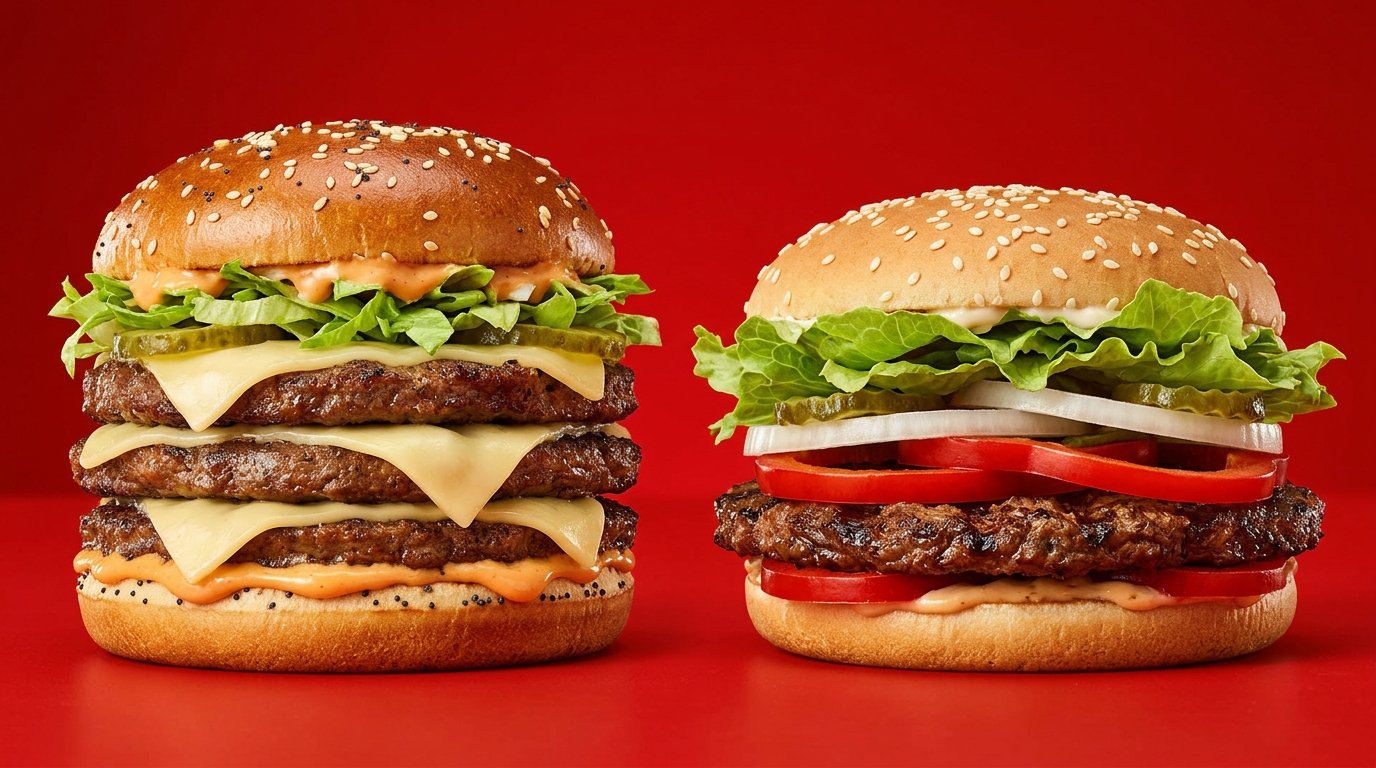
Here’s where it gets fun. The same week Burger King was rolling out Patty, McDonald’s CEO Chris Kempczinski posted a promotional video for the chain’s new Big Arch burger, and the internet decided to have a field day with it.
The clip shows Kempczinski holding up the burger, taking what can only be described as a theoretical bite, and declaring it delicious. The bite was so cautious, so politely performative, that social media users immediately turned it into a meme. “This almost feels dystopian. He’s acting like he’s afraid of it,” one viewer wrote. Others joked that he “promised” to finish the burger at some point.
Burger King, Wendy’s, and A&W all jumped in, posting their own far more enthusiastic burger-eating videos on Instagram. The message was not subtle. BK’s response was (essentially), “We actually eat our burgers here.” Even Mini Cooper got in on it, quipping that it might begin “test driving our cars one meter at a time.”
The timing was either a coincidence or Burger King is having a genuinely excellent PR week. Either way, it’s hard not to notice the contrast: a brand rolling out AI that listens to employees and simultaneously out-eating its biggest rival on social media is at least keeping things interesting.
The Bigger Picture for QSR and AI
Burger King’s move is part of a broader pattern across quick-service restaurants. McDonald’s abandoned its drive-thru AI experiment. Taco Bell rethought its trial after mishaps. Starbucks dialed back automation after admitting machines weren’t replacing baristas the way it had hoped and is now shifting toward AI that assists staff rather than replaces them. That’s exactly the lane Burger King is claiming with BK Assistant.
The direction makes sense: AI as operational support rather than customer-facing automation has a better track record in food service. The question for Burger King — and for the industry — is whether “AI coaching” holds up better in practice than it does on an investor slide. If Patty ends up making employees feel watched rather than supported, the friendliness scores may go up while the actual friendliness goes down.
That would be ironic. And Patty would probably notice.
Sources: Today.com, The Register, Inc., Ad Age