Mexico Is the Bet PepsiCo, Nestlé, and Coca-Cola Are All Making
When three of the world's largest food and beverage companies move in the same direction at the same time, operators should pay attention.

When three of the world’s largest food and beverage companies move in the same direction at the same time, operators should pay attention.
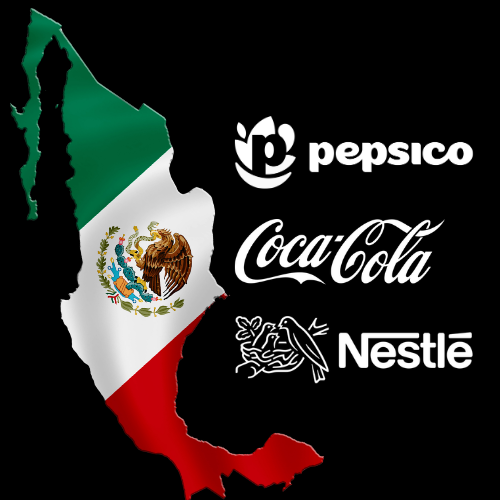
PepsiCo, Nestlé, and Coca-Cola are all accelerating major capital commitments in Mexico, and the details reveal a strategy that goes well beyond chasing growth in an emerging market. This is about supply chain resilience, nearshoring logic, and repositioning North American manufacturing for the next decade.
TLDR
- PepsiCo, Nestlé, and Coca-Cola have committed over $9 billion to Mexico.
- New plants are producing Lay’s, Nescafe, Purina, and Coca-Cola juice lines.
- USMCA access and U.S. proximity make Mexico a nearshoring anchor.
- A new sugar tax is accelerating the pivot to non-carbonated products.
- Higher compliance standards are coming for suppliers entering these networks.
PepsiCo: $2 Billion and a New Snack Hub in Guanajuato
In March 2026, PepsiCo inaugurated a new Sabritas plant in Celaya, Guanajuato, representing a $467 million investment and adding roughly 66,500 metric tons of annual production capacity. The facility runs three high-tech lines producing Sabritas (the Mexican name for Lay’s), Doritos, Cheetos, and Ruffles, and it sources raw materials directly from local agricultural producers. The plant features rainwater harvesting, water recirculation systems, and solar panels.
The Celaya facility is the first major project under a broader $2 billion investment plan PepsiCo is executing in Mexico between 2025 and 2028. Separately, PepsiCo joined Mexico’s “Hecho en Mexico” program in mid-2025, committing an additional $100 million in the State of Mexico. The company’s existing footprint includes Sabritas and Gamesa snack facilities concentrated in the Bajio region, making Guanajuato and surrounding states a clear center of gravity for its Mexican manufacturing strategy.
Nestlé: $1 Billion Across Four States, Half of It Coffee
Nestlé announced a $1 billion investment for 2025 through 2027 under its “Plan Mexico” initiative, spread across four production sites: Veracruz, Guanajuato, Queretaro, and the State of Mexico. The single largest piece is a $455 million commitment in the State of Mexico, announced in early 2026, covering factory upgrades in Toluca and a new distribution center in Zumpango. Products targeted for expanded output include Nescafe, Maggi culinary products, and Purina pet food.
A full 50% of the total $1 billion is dedicated to coffee production, centered on the Veracruz facility. That plant, inaugurated in 2022 following a $340 million build, already operates on 100% green electricity with zero water waste. The new investment expands its capacity further as Nestlé positions Veracruz as a regional and global coffee export hub. Nestlé has also committed to sourcing 100% of Nescafe coffee responsibly, traced to identified farms, by 2025. A new distribution center under the plan is designed to strengthen that export infrastructure.
Coca-Cola: $6 Billion, a Century in Mexico, and a World Cup
The Coca-Cola system is making the boldest move of the three. In early 2026, Coca-Cola Latin America President Henrique Braun and Mexican President Claudia Sheinbaum jointly announced a $6 billion investment in Mexico for 2026, timed to mark the company’s 100th anniversary in the country and to build capacity ahead of the 2026 FIFA World Cup, with key host cities including Mexico City and Guadalajara.
The investment spans production expansion, distribution infrastructure, and sustainable packaging, with particular emphasis on recycled PET. On the product side, Coca-Cola is diversifying away from sparkling beverages and into juices, nectars, functional drinks, and low-calorie lines, a pivot driven in part by Mexico’s new excise tax (IEPS) on sweetened beverages that took effect in 2026.
The capital flows through the bottler system. Arca Continental, headquartered in Monterrey, is investing approximately $1.1 billion in 2026, with roughly half targeting Mexico. Key projects include a new 1.4-billion-peso distribution center in Tonala, Jalisco, opened in May 2025 to serve 40,000-plus customers in the Guadalajara metropolitan area, and a 2.6-billion-peso expansion of the PetStar recycling plant in Toluca that will push recycled PET capacity to 86,000 tons annually. Arca Continental has set a target of 50% recycled resin in all packaging by 2030. Meanwhile, the Jugos del Valle-Santa Clara plant in Lagos de Moreno, Jalisco received an $85 million investment in August 2025 to add non-carbonated drink production lines and create 700 direct jobs.
Why This Matters for the Industry
The timing of all three commitments is not coincidental. Mexico offers a combination of advantages that few markets can match right now: a large and growing consumer base, competitive manufacturing costs, USMCA trade access, and geographic proximity to the U.S. that makes it a natural nearshoring anchor for North American supply chains.
What is also notable is that sustainability infrastructure is embedded in each of these investments, not bolted on as an afterthought. Nestlé’s zero-waste Veracruz coffee plant, PepsiCo’s solar-powered Celaya facility, and Coca-Cola’s PetStar recycling expansion are all being positioned as core to the investment rationale. For suppliers and regional operators, that raises the compliance bar. Contract opportunities will follow this capital, but so will higher quality and environmental standards from multinationals that are now treating Mexico as a long-term operational home rather than a secondary market.
Sources: Bakery and Snacks, Promexico Industry, ProFood World, Mexico Business News, Food Ingredients First